

Experts reveal the launch of advanced satellites aimed at enhancing weather forecasting and early warning systems.
In an urgent response to the escalating threat of extreme weather, a groundbreaking initiative is set to unfold over the next 15 years with the launch of a series of advanced satellites. These high-tech devices aim to enhance weather forecasting accuracy and provide early warnings, ultimately saving lives.
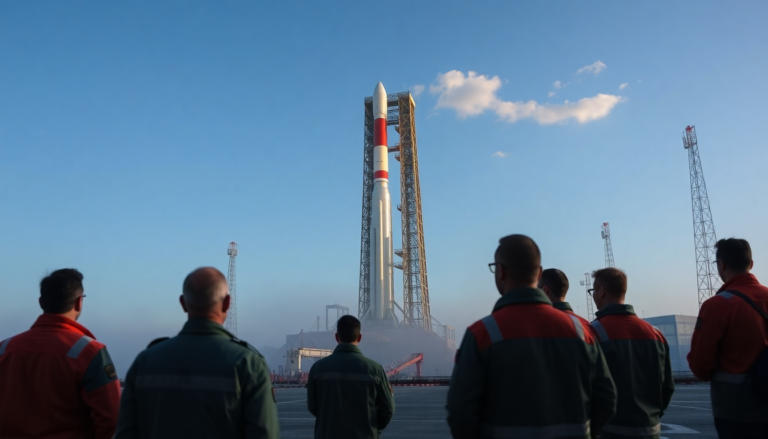
The Metop Second Generation project marks a pivotal leap in meteorological science, with the first satellite, Metop-SG A1, launching from French Guiana this week.
What You Need to Know About the Metop Second Generation Project
The Metop Second Generation initiative, led by the European Organisation for the Exploitation of Meteorological Satellites (EUMETSAT) in partnership with the European Space Agency, plans to deploy six satellites into low-Earth orbit.
But why is this important? The primary goal is to refine our weather predictions through enhanced data collection, feeding directly into the Met Office’s forecasting models.
The inaugural satellite, Metop-SG A1, is scheduled to lift off on August 13, 2025, at 21:37 local time (00:37 UTC).
Once it’s up and running, it will start gathering crucial data on weather patterns, significantly boosting our short-range and long-term forecasting capabilities.
Phil Evans, EUMETSAT’s director general, highlighted the critical role these satellites will play in predicting severe weather events that have historically led to devastating economic and human losses in Europe. “Extreme weather has cost Europe hundreds of billions of euros and tens of thousands of lives over the past 40 years,” he stated. With the launch of Metop-SG A1, national weather services are expected to gain powerful new tools to combat the impacts of the climate crisis.
What Makes These Satellites So Special?
Once operational, the Metop-SG satellites will enable forecasters to make predictions up to 10 days in advance, which is a game changer for both European and global weather forecasts. This advanced data collection will help spot early signs of storm development and other severe weather events, especially in higher latitude regions. Isn’t that exciting?
Additionally, the satellite will carry the Copernicus Sentinel 5 mission tracker, which focuses on air quality monitoring and long-term climate assessments. Positioned about 800 kilometers above Earth, it will orbit our planet every 100 minutes, providing remarkable coverage and imaging capabilities.
Moreover, the satellite will utilize a range of instruments, including sounders, to measure temperature, precipitation, wind patterns, and pollution levels. Simon Keogh, head of space applications at the Met Office, described this multifaceted approach to data collection as “absolutely vital,” noting how satellite data significantly boosts forecasting accuracy.
Why This Matters for Climate and Public Safety
As the launch date nears, the urgency for better weather predictions has never been clearer. UK Science Minister Lord Vallance pointed out the growing unpredictability of weather patterns, highlighting the necessity of these satellites in our fight against climate change. “This launch is the latest result of the UK investing with European partners to bolster weather predictions,” he emphasized, underlining the importance of satellite technology in protecting lives and infrastructure.
Recent events have made the need for enhanced forecasting capabilities all the more pressing. The UK has just experienced its fourth heatwave of the summer, leading to health warnings and raising serious concerns about public safety as temperatures soar. The data collected from the Metop-SG satellites will be crucial in delivering timely advisories to shield communities from the escalating impacts of climate change.
In summary, the Metop Second Generation project is set to revolutionize how we gather and utilize meteorological data. This initiative will play a key role in improving disaster preparedness and response strategies as we confront the ever-growing challenges posed by severe weather conditions. Are you ready for the future of weather forecasting?
