

Uncover the journey of women’s Gaelic football, highlighting its growth and significance in Irish culture.
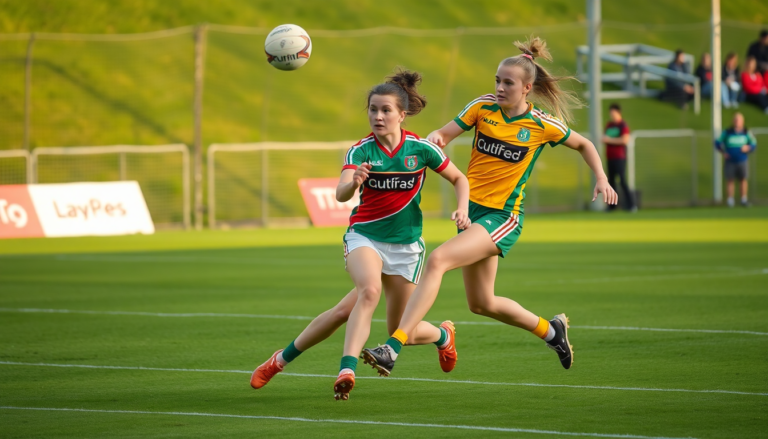
Women’s Gaelic football has come a long way since its humble beginnings in the 1920s. What started as a curious novelty has blossomed into one of the most beloved team sports in Ireland. It wasn’t until the 1960s that the sport really began to gain momentum, paving the way for the vibrant community we see today.
The formation of the Ladies’ Gaelic Football Association (LGFA) in 1974 was a game-changer, providing the necessary structure for this growing sport.
Foundations of Women’s Gaelic Football
While the roots of women’s Gaelic football trace back to the 1920s, it was the 1960s that marked a turning point.
Local tournaments became a staple, igniting grassroots enthusiasm and participation. This surge in local interest laid the foundation for what would grow into a significant part of Irish sporting culture.
Fast forward to the summer of 1974, when the LGFA was established—nearly 90 years after the men’s Gaelic Athletic Association (GAA) was formed.
This formal structure was crucial for the sport’s development. By October of that same year, Tipperary made history by winning the first All-Ireland Senior Ladies’ Football Championship. Just eight years later, in 1982, the GAA officially recognized the LGFA, solidifying its place in the landscape of Irish sports.
The late 1980s and 1990s brought a surge of competitiveness among county teams. Powerhouses like Kerry, Waterford, Mayo, and Monaghan emerged, significantly shaping the evolution of women’s Gaelic football and establishing its importance within the larger tapestry of Irish sport.
Modern Developments and Significant Milestones
Today, women’s Gaelic football is one of Europe’s fastest-growing sports, boasting nearly 200,000 members across around 1,000 clubs, both at home and abroad. The popularity of the sport has skyrocketed since the 2010s, with record attendance at All-Ireland finals. In 2017, Croke Park welcomed a stunning 46,286 spectators, a number that surged to 56,114 by 2019, making it one of the most-attended women’s sporting events in Europe.
Recent events underscore this upward trajectory. On August 3, a thrilling senior championship final drew in 48,089 fans, as Dublin triumphed over Meath with a score of 2-16 to 0-10. This marked a significant milestone in attendance, showcasing the growing fanbase.
The 2025 All-Ireland Senior Ladies’ Football Championship featured twelve counties competing in exciting provincial round-robin stages, culminating in knockout rounds. This competition structure, which includes relegation playoffs and simultaneous junior and intermediate tournaments, reflects the sport’s evolution and increasing competitiveness.
On finals day, Louth claimed the junior title against Antrim, while Tyrone took home the Intermediate final against Laois. In the senior final, Dublin showcased an impressive performance, with standout players like Hannah Tyrrell and captain Carla Rowe leading the charge. The Player of the Match, Orlagh Nolan, who made a remarkable return from an ACL injury, played a pivotal role in Dublin’s victory.
Future Prospects and Cultural Significance
The LGFA is dedicated to ongoing development, with county boards establishing committees focused on education, volunteer training, and creating pathways for players. Initiatives like Gaelic4Girls and Gaelic4Teens are specifically designed to encourage participation among various age groups. The league remains vibrant, with Kerry recently clinching their thirteenth Division 1 title in the 2025 Lidl Ladies’ National Football League.
As interest in women’s Gaelic football continues to rise, its relevance in the betting landscape is also becoming evident, highlighting the sport’s growing competitiveness. This transformation from a sidelined pastime to a celebrated staple of Irish culture reflects changing attitudes toward women’s sports. Today, it stands as Ireland’s most significant women’s team sport, drawing substantial crowds and media attention.
Media coverage plays a crucial role in promoting the sport, with TG4 broadcasting senior championship games live and streaming content across various platforms. Their commitment ensures women’s Gaelic football receives the visibility it deserves, culminating in triple-header finals days at Croke Park that feature junior, intermediate, and senior competitions.
While Ireland remains the heart of women’s Gaelic football, the sport is flourishing internationally. Players of Irish heritage are making their mark in areas like Britain, North America, Australia, and Europe. In Australia, a new generation of athletes is emerging, with talents like Lauren Frost and Tom Dermody showcasing their skills at the Australasian Games.
Women’s Gaelic football is more than just a sport; it’s a vibrant community offering girls and women pathways to participate in organized sports at various levels. From grassroots programs in schools to elite competitions at Croke Park, the sport fosters health, community, and equality, ensuring its sustained growth and relevance.
The 2025 season exemplifies the incredible progress women’s Gaelic football has made, highlighted by Dublin’s senior final victory and the ongoing expansion of leagues and competitions. The future looks bright for women’s Gaelic football as it continues to evolve and thrive, integrating more deeply into the broader GAA structure and opening new avenues for growth.
