

What does it mean to report from a war zone? For journalists in Gaza, every day is a battle against fear and survival. Let's dive into their reality.
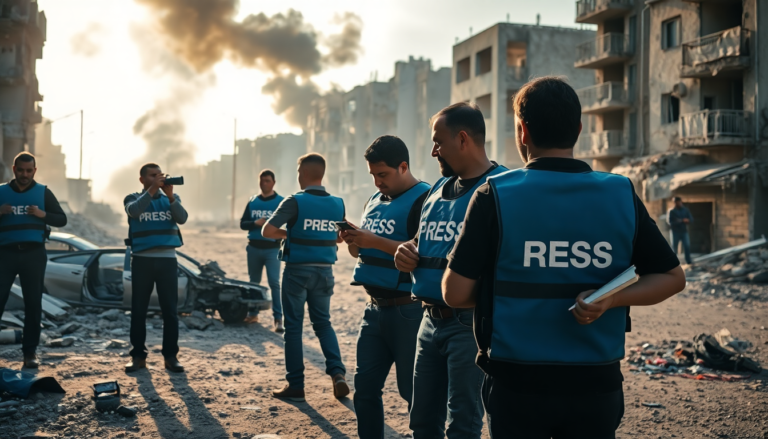
Being a journalist in Gaza has always been a perilous job, but recent events have escalated the danger to unprecedented levels. Can you imagine working in a place where your press vest feels less like a shield and more like a target? 😱 The recent Israeli attack on a tent full of journalists has left many in the media community grappling with a terrifying new reality, forcing them to confront both physical threats and the emotional toll of their profession.
The chilling impact of targeted attacks
Gaza is often dubbed the most dangerous place for media personnel, and the statistics back this up. According to local sources, at least 238 media workers have lost their lives in attacks since October 2023 alone.
This staggering number surpasses fatalities recorded during major wars, shining a light on the grim reality faced by those dedicated to reporting the truth.
Take the case of Al Jazeera journalist Hani Mahmoud, who perfectly encapsulates the sentiment many journalists share: “Press vests and helmets, once considered a shield, now feel like a target.” This isn’t just a reflection of fear; it illustrates the constant anxiety that weighs on journalists every time they head out to cover a story.
Will they come home safely? That unspoken question lingers heavily, doesn’t it?
After the heartbreaking death of Al Jazeera staff, including Anas al-Sharif, who was killed under controversial circumstances, the media landscape has become even more precarious. The Israeli military’s admission of deliberately targeting the journalists’ tent, following unverified claims about al-Sharif’s affiliations, only adds fuel to the fire. This narrative of vilifying journalists as “terrorists” isn’t new, but it has reached alarming heights.
The emotional toll of reporting in conflict
For many journalists in Gaza, the struggle extends beyond physical safety; it encompasses emotional survival as well. Palestinian journalist Sally Thabet articulates this duality beautifully: “As a mother and a journalist, I go through this mental dissonance almost daily.” Balancing the demands of work with the fear of random attacks is nothing short of an ongoing nightmare. The emotional strain is exacerbated by harsh living conditions, where even basic necessities are often scarce.
Hussein Saad, a former educator at al-Quds Open University, highlights the broader implications of these targeted attacks. “The deliberate targeting of Palestinian journalists has a strong effect on the disappearance of the Palestinian story,” he notes. It’s not just about individual safety; it’s about the community’s voice being silenced amid chaos. Who else feels that the narratives we hear are becoming increasingly one-sided? 🤔
Journalists like Amer al-Sultan and Hassan Abu Dan share harrowing experiences that underscore the daily challenges they face. Al-Sultan recalls days spent surviving on nothing but water due to food scarcity. “This is one of the most difficult challenges we face amid this war against our people: starvation,” he shares. Meanwhile, Abu Dan paints a picture of unimaginable living conditions, where something as basic as drinking clean water becomes a luxury.
Resilience in the face of adversity
Despite the overwhelming challenges, Palestinian journalists remain fiercely committed to their duty. Al Jazeera’s Mahmoud sums it up perfectly: “Documenting the truth is not just a profession, but a duty to their people and history.” This profound sense of responsibility pushes them to report, even when the odds seem stacked against them.
Every story told is a testament to their bravery and resilience. They aren’t just chronicling events; they are preserving the narratives of their people amid destruction. This is a call to recognize the sacrifices made by journalists in war zones—individuals who risk their lives to shed light on the darkest of situations.
So, who else thinks we need to rally behind these brave souls? 🗣️💔 Their stories matter, and it’s time we amplify their voices. Let’s talk about it! #JournalismMatters #GazaVoices
