

Tensions rise in Serbia as President Vucic declares tough measures against anti-government protests, labeling demonstrators as terrorists.
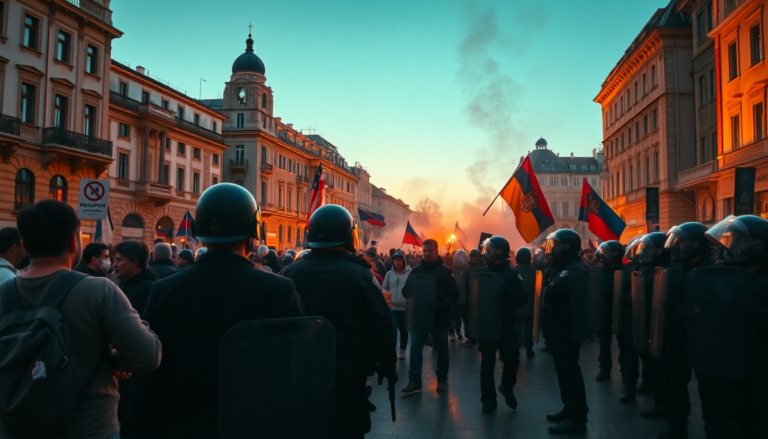
Serbia is holding its breath as President Aleksandar Vucic announces tough measures in response to escalating anti-government protests. These demonstrations, which have sparked unrest over several nights, are challenging Vucic’s increasingly authoritarian rule in the Balkans. With tensions between protesters and police reaching a boiling point, the situation is anything but stable.
Protests escalate amid government accusations
In a recent televised address, President Vucic did not hold back. He labeled the demonstrators as engaging in “pure terrorism,” claiming they are part of a Western-led conspiracy aimed at destabilizing Serbia. “Our country is in grave danger,” he asserted, suggesting that these protests jeopardize national values and safety.
However, Vucic failed to provide any solid evidence backing his claims of a coordinated effort to topple his government. He ominously warned, “Unless we undertake tougher steps, it is just a matter of days before someone is harmed,” highlighting the urgent need for a government response.
The violence reached a peak over the weekend, with protesters setting fire to the offices of Vucic’s ruling Serbian Progressive Party in western Serbia. Clashes unfolded in major cities like Belgrade and Novi Sad, where riot police resorted to tear gas as demonstrators retaliated with stun grenades and other projectiles.
Government’s response and public sentiment
While Vucic announced that a state response would be forthcoming within a week, he reassured the public that a state of emergency would not be declared. “You will witness the determination of the state of Serbia. We will use everything at our disposal to restore peace and order,” he declared, signaling a firm stance as the government grapples with growing unrest.
Throughout the protests, numerous arrests have been reported, and accusations have surfaced regarding law enforcement using excessive force. Human rights advocates have raised alarms about arbitrary detentions amidst this chaos.
The protests were initially ignited by a tragic incident: a concrete canopy at a train station collapsed, claiming 16 lives. Many Serbians believe this disaster reflects the deep-rooted corruption in state-run infrastructure projects, further fueling public outrage against the government.
Political implications and international relations
As Serbia navigates this turbulent period, President Vucic finds himself under increasing scrutiny regarding his governance. Critics have accused him of stifling democratic freedoms while fostering an environment ripe for organized crime and corruption. Yet, despite these mounting challenges, Vucic has managed to maintain strong ties with Russia and China, often positioning himself as a bulwark against Western influences.
In light of the protests, Vucic has received verbal backing from Russia, which he describes as support against what he calls a “coloured revolution.” This alliance raises important questions about Serbia’s aspirations for EU membership, especially as the country tries to balance its international relations amid internal turmoil.
The coming weeks will be pivotal in shaping Serbia’s political future as Vucic prepares to implement the measures he believes are necessary to silence dissent and restore order. Will these actions quell the unrest, or will they only amplify the call for change? Only time will tell.
