

The recent flash floods in Pakistan highlight the critical need for improved warning systems and climate resilience strategies.
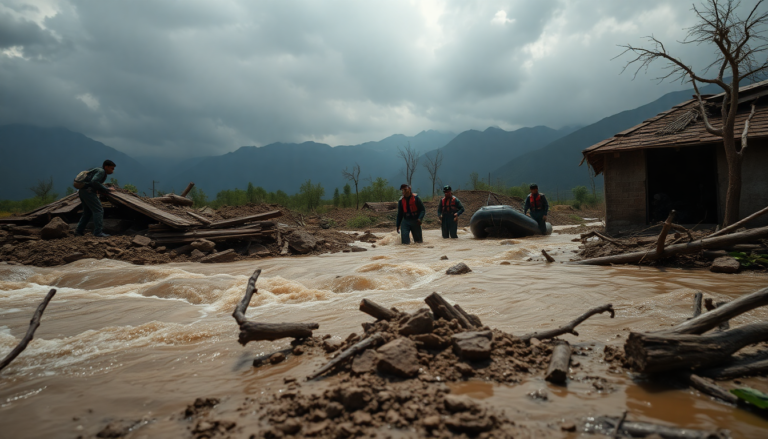
Hey friends, have you heard the latest about the catastrophic floods in Pakistan? It’s honestly heartbreaking. With at least 337 confirmed dead and many still missing, this situation is a stark reminder of the consequences of climate change. The weather is becoming more unpredictable, leaving communities vulnerable.
Let’s dive into what’s happening and why it matters. 🌍
The devastation unfolds
In the Kishtwar district, rescue teams are tirelessly working in the remote village of Chositi, where the floods have claimed at least 60 lives and injured around 150 people.
Can you imagine the fear and chaos? 🌩️ With torrential rains and sudden cloudbursts, homes were obliterated by powerful torrents rushing down from the mountains, carrying massive boulders like they were nothing. It’s giving me major disaster movie vibes, but unfortunately, this is real life.
And it doesn’t stop there. Over in Buner, the situation is just as dire. Emergency service spokesperson Mohammad Suhail reported the recovery of 54 bodies after extensive search efforts. Yet, many villagers remain unaccounted for. These communities are not only grappling with loss; they’re also facing the harsh reality of being caught off guard. How is it that, in this day and age, people are still not receiving adequate warnings about such life-threatening events?
A broken warning system
Residents are outraged, pointing fingers at local officials for their lack of timely evacuation alerts. 🤔 In remote areas, traditional methods like mosque loudspeakers weren’t used to broadcast warnings. Mohammad Iqbal, a schoolteacher, emphasized how lives could have been saved with better communication. “Survivors escaped with nothing,” he said. This might be an unpopular opinion, but I think we really need to rethink how we alert communities in danger.
The government claims there was an early warning system, but the sudden intensity of the downpour caught everyone off guard. Lieutenant General Inam Haider Malik noted that climate change is leading to unpredictable weather patterns, with this monsoon season already seeing 50% more rainfall than last year. Are we really prepared for what’s coming next? 😟
Climate change: the undeniable threat
Flash floods during the monsoon season are not new for Pakistan, but the increasing frequency and intensity are alarming. Experts agree that climate change is exacerbating these extreme weather events, impacting vulnerable communities in South Asia. It’s a tough pill to swallow, especially since Pakistan contributes less than one percent to global emissions but bears the brunt of devastating consequences.
Asfandyar Khan Khattak, a disaster management official, acknowledged that no forecasting system exists to predict the exact timing and location of cloudbursts. This leaves communities exposed and at the mercy of nature. It’s a wake-up call for all of us. We need to advocate for better infrastructure, more robust early warning systems, and, most importantly, climate action. 🌍 Who else thinks it’s time for a change?
As we reflect on these events, let’s remember the lives lost and the communities affected. What can we do to support them? This is a conversation we need to keep having, not just for Pakistan but for the world. Let’s keep the dialogue going. 💬✨
