

In the face of increasing violence, hundreds of thousands of Israelis took to the streets to demand an end to the war in Gaza and the release of hostages. What does this mean for the future of the region?
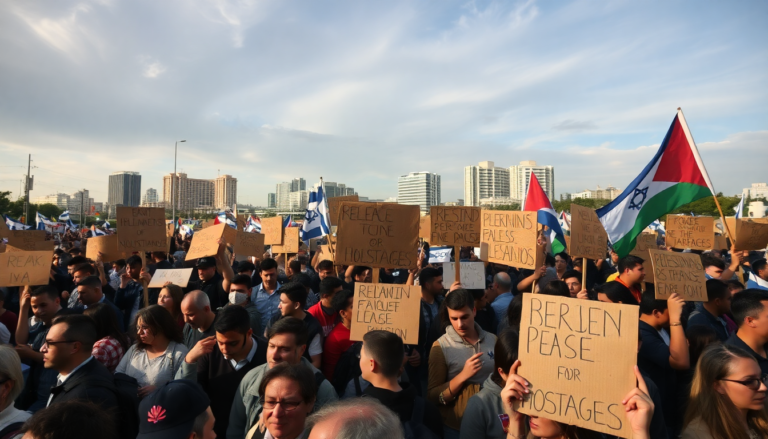
This past Sunday, Israel was alive with an unprecedented wave of protests as hundreds of thousands of citizens united to demand peace and the release of hostages. Okay, but can we talk about the atmosphere? It was charged and emotional, as families anxiously awaited news about their loved ones amidst the ongoing conflict in Gaza.
This wasn’t just another political rally; it was personal for so many. 💔
The scale of the demonstrations
Can you imagine being part of one of the largest protests in recent history? Organizers reported that nearly half a million people gathered in Tel Aviv alone! The streets echoed with chants emphasizing that war should never come at the cost of innocent lives.
It was a powerful moment—a collective expression of grief and hope, where the community stood shoulder to shoulder, demanding an end to the violence.
As schools, businesses, and public transport ground to a halt, it became clear that this was more than just a protest; it was a national day of action.
Families of captives and those who had lost loved ones came together, shining a light on the human cost of the ongoing conflict. The vibe? Somber yet determined, as many Israelis voiced the urgent need for the government to prioritize the return of hostages over military strategies.
A call for action
The protesters had a clear message: “Bring back the 50 hostages, end the war.” Many carried banners with the faces of those still held captive in Gaza, a haunting reminder of the urgent need for resolution. The emotional weight was heavy, as speakers shared gut-wrenching stories of their loved ones suffering in silence.
One former captive, Arbel Yehoud, hit the nail on the head when he said, “Military pressure doesn’t bring hostages back – it only kills them.” This perspective serves as a stark reminder that behind every statistic, real lives are at stake. The urgency for a peaceful solution has never been clearer.
Tensions ran high, and the police responded with force, using water cannons against the crowds. But the protesters stood their ground, blocking major roads and making their voices heard. It’s a testament to how deeply divided public opinion can be, especially when families find themselves caught in the crossfire of political agendas.
Voices from the crowd
Amidst the crowd, a chorus of voices shared unique perspectives on the situation. “This is probably the last minute we have to save the hostages,” said Ofir Penso, a 50-year-old protester. His words captured the sense of urgency that many felt—time is of the essence, and action is needed now more than ever.
As the protests unfolded, notable figures joined in solidarity. Israeli artists, celebrities, and even politicians added their voices to the collective call for change. The common sentiment? The government must take responsibility for the hostages’ safety, treating them not as pawns but as citizens worthy of returning to their families.
Let’s not overlook the global impact of these protests. The international community is watching closely, eager to see how the Israeli government will respond. Will they heed the calls for a ceasefire and a hostage exchange deal? Only time will tell, but for now, the voices of the people are ringing loud and clear.
As we reflect on these events, one can’t help but wonder: What does this mean for the future of peace negotiations in the region? Will these protests spark meaningful dialogue, or will they be yet another chapter in a long and painful story? Thoughts? 💭
