

Can Syria find a path to justice while rebuilding its society? Let’s explore the complexities of reconciliation in a fractured nation.
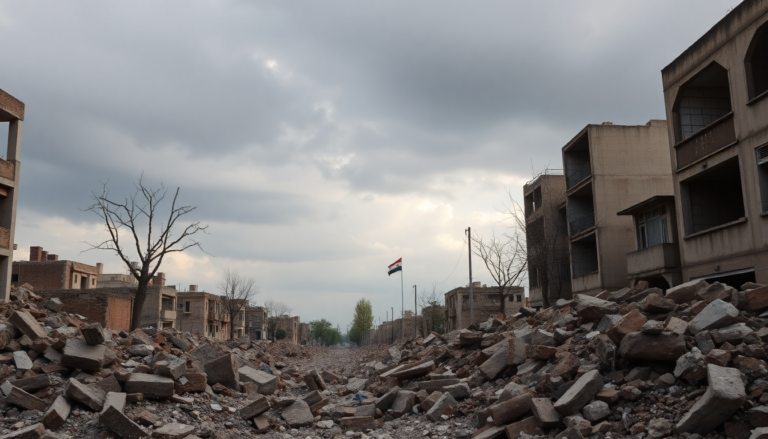
Okay, but can we talk about Syria for a second? 🧐 This country is standing at a crucial crossroads, trying to pick up the pieces after a devastating conflict that has left deep scars across its landscape. As it attempts to move forward, one thing is crystal clear: a comprehensive process for justice and accountability is essential to address past crimes and foster a sense of unity among its diverse population.
With violence flaring up recently, especially in places like Manbij and Suwayda, the urgency of this need couldn’t be more pronounced. So, what does the future hold for Syria, and how can it navigate these tumultuous waters? Let’s dive in! 🌊
The Current Landscape of Violence
In early August, tensions flared between the Kurdish-led Syrian Democratic Forces and Syrian government troops near Manbij, a Kurdish-majority area. This unsettling development followed a devastating week in Suwayda, where clashes between Druze and Sunni Bedouin groups resulted in over 1,400 deaths and the displacement of nearly 175,000 individuals.
Who else noticed that the violence is a stark reminder of the sectarian divisions that Bashar al-Assad once exploited to maintain control? Now, in his absence, those divisions seem to be escalating even further. 😔
And it doesn’t stop there. In March, clashes in coastal regions like Latakia and Tartus, primarily inhabited by the Alawite community, resulted in even more bloodshed. Most victims were civilians, and the toll has been staggering, with about 128,500 people forced from their homes. This trend of violence not only reflects unresolved grievances from the past but also highlights the proliferation of armed groups in a landscape that’s still chaotic. It’s a serious situation that begs the question: how do we move beyond this turmoil?
The Challenge of Leadership and Trust
With President Ahmad al-Sharaa now at the helm following al-Assad’s ouster, the big question is: can trust be rebuilt across Syria’s fractured factions? Al-Sharaa’s focus has mostly been on international normalization and economic development. While these goals are crucial, they’ve sparked concern among minority groups like the Druze, Alawites, and Kurds. Many fear that a failure to manage armed factions might lead to even more violence and instability. 😟
As the country gears up for elections in September, the legitimacy of al-Sharaa’s government is hanging in the balance. Without a genuine reconciliation process, could these elections deepen existing divides rather than heal them? Al-Sharaa’s strategy seems to emphasize reconstruction and economic growth, but many critics are quick to point out that without addressing the root causes of conflict, economic support alone won’t be enough to ensure lasting stability.
In May, al-Sharaa called for Syrians to unite for reconstruction, offering a glimmer of hope amidst the despair. But here’s the kicker: can this message truly resonate with a populace that’s weary from past injustices? As the government seeks international recognition and assistance from regional players like Turkiye and Gulf states, the challenge remains: how do they balance economic recovery with the pressing need for justice? 🤔
The Imperative for Accountability
The absence of a robust accountability framework for war crimes committed during the al-Assad regime is a huge barrier to progress. Promises to hold accountable those responsible for sectarian massacres are still unfulfilled, leading to a pervasive sense of impunity. This gap isn’t just a moral failing—it’s a strategic one that risks perpetuating cycles of violence and mistrust.
What Syria genuinely needs is a new social contract that addresses the grievances of its people. An impartial and transparent justice process is vital for healing. The international community, particularly the United Nations, could play a pivotal role in facilitating this process. Drawing inspiration from the South African Truth and Reconciliation Commission, Syria could shift its focus from punitive measures to uncovering the truth about past atrocities. 🕊️
This approach not only prioritizes healing over retribution but could also help build public trust in the new regime. By fostering a shared vision rather than a fragmented narrative, Syria might find a path toward stability and unity, steering clear of demands for federalism that could further destabilize the nation.
As Syria navigates its post-Assad era, the road to recovery is fraught with challenges. The international community must evolve its approach, supporting civil society and demanding accountability for past and present crimes. Only then can Syria hope to break free from the cycles of violence that have defined its recent history, paving the way for a more peaceful future. 🌟
