

What happens when political factions clash with the state? Let's unpack the recent events surrounding the Popular Mobilisation Forces in Iraq.
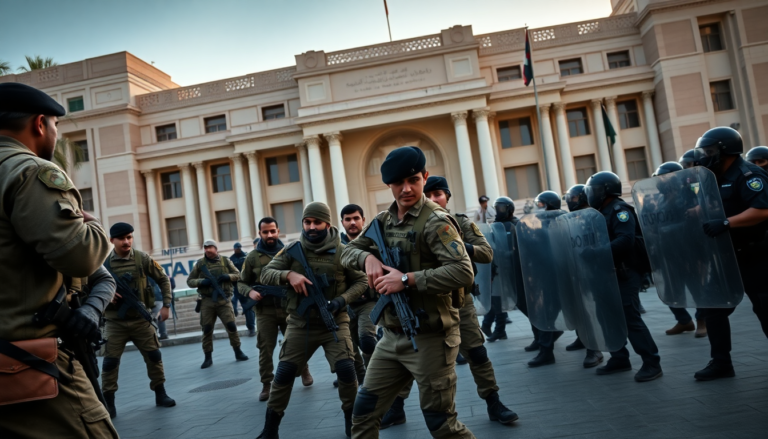
Hey friends! So, have you been following the recent drama in Iraq? It’s quite the wild ride over there, especially with the Popular Mobilisation Forces (PMF) making headlines. 🚨 On July 27, two brigades from the PMF stormed the Iraqi Ministry of Agriculture, clashing with police officers.
This wasn’t just a random power play; it reveals some intense dynamics at work in Iraq’s political scene. Let’s break it down!
What sparked the clash?
Okay, picture this: Ayad Kadhim Ali, who was recently dismissed from his position as the head of the ministry’s office, calls in some reinforcements.
These brigades, aligned with Kataib Hezbollah (a group affiliated with Iran), didn’t just show up for a chat – they brought the heat, resulting in the tragic death of a police officer. 😔 This clash is more than a squabble; it’s a test of how far the Iraqi state can hold these militias accountable.
Who else thinks this is a pivotal moment for Iraq’s governance?
The Iraqi government is pushing for new legislation to fully integrate the PMF into the state framework. Some argue this could help regulate their actions, while others fear it might just legitimize these powerful groups even more. Unpopular opinion: can legislation really rein in these factions, or is it just putting lipstick on a pig? 🤔
Understanding the PMF’s background
Let’s take a step back. The PMF, or al-Hashd al-Shaabi, is essentially an umbrella group for mostly Shia armed factions, some of which have cozy ties with Iran. It all started back in 2014 when Iraqi Grand Ayatollah Ali al-Sistani called on able-bodied men to defend the country from ISIS. Fast forward, and now we have a complex web of power dynamics involving these militias.
For instance, Asa’ib Ahl al-Haq, one of the more prominent groups, broke away from Jaish al-Mahdi back in 2007. They’ve since gained considerable influence, even stepping into Syria’s civil war to back the Assad regime. But the question remains: how do these groups reconcile their militia roots with the need for state legitimacy? This is giving me some serious identity crisis vibes. 😅
In 2016, Iraq’s parliament recognized the PMF as part of its national security framework, but the law is murky when it comes to command and budget oversight. This lack of clarity has allowed some factions to operate independently, targeting US interests. Just imagine the tension! 💥
The current political landscape
Now, let’s zoom into the present. In 2024, the PMF was allocated a whopping $3.4 billion budget – more than what Lebanon gets. While that’s peanuts compared to the Ministry of Defence’s $21.1 billion, it’s still a significant amount for a group that doesn’t even have a clear membership list. Talk about transparency issues! 😳
As PMF factions gain political power, they’re also crafting political wings and securing seats in parliament. But with great power comes… you guessed it, potential abuse! Some factions have been known to wield their influence in troubling ways, particularly against protesters who dared to challenge the political elite back in 2019.
So, what’s next? The Iraqi government is drafting a new law to provide the PMF with stable employment, bringing them under the command of Prime Minister Mohamed Shia al-Sudani. But not everyone is on board with this integration. Civil society is wary of granting these factions equal status with the army and police, especially given their notorious past. Who else feels uneasy about this situation? 😬
Ultimately, the recent clashes at the Ministry of Agriculture will test the PMF’s commitment to cooperating with the state. Prime Minister al-Sudani has indicated a strong desire to assert authority over the PMF, but can he actually enforce accountability? Only time will tell. What do you think – will Iraq manage to navigate these choppy waters?
