

The UK government has taken urgent steps to save 1,450 jobs as Speciality Steel faces compulsory liquidation, raising significant industry concerns.
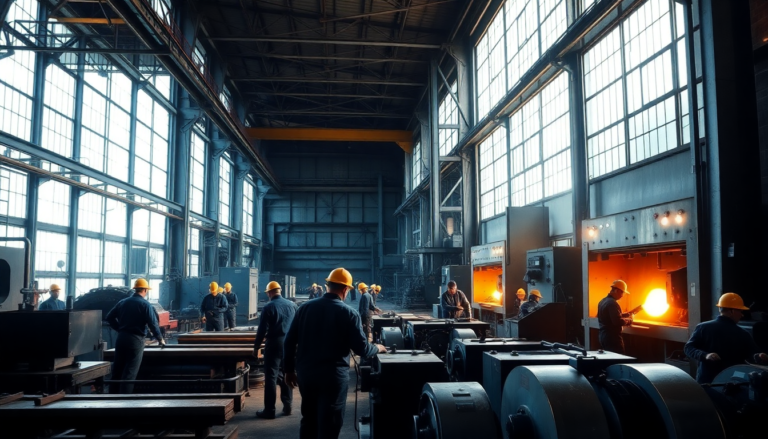
In a bold move, the UK government has stepped in to seize control of Speciality Steel, the nation’s third-largest steelworks, all in a bid to protect 1,450 jobs. This decision follows a recent High Court ruling that confirmed the company’s compulsory liquidation.
With operations in Rotherham and Stocksbridge, Speciality Steel will now be overseen by the Official Receiver along with special managers from advisory firm Teneo. But what does this mean for the workers and the future of the UK steel industry?
Details on the Government’s Intervention
On Thursday, the High Court ruled that Speciality Steel, once part of Sanjeev Gupta’s Liberty Steel group, could no longer continue its operations, leading to its entry into compulsory liquidation. In a response aimed at softening the blow for employees, the government has committed to covering ongoing wages and operational costs while actively seeking a buyer.
This intervention is crucial to safeguard livelihoods during a time of uncertainty.
However, not everyone is on board with the government’s approach. Jeffrey Kabel, Speciality Steel’s Chief Transformation Officer, took a strong stance against the decision, calling it “irrational.” He argued, “The decision to push Speciality Steel UK into compulsory liquidation, especially when we have support from the world’s largest asset manager to resume operations and facilitate creditor recovery, is irrational.” Kabel stressed that a planned investment from GFG, Gupta’s parent company, would have strengthened the steel sector, preserved jobs, and established a sustainable operational framework.
A spokesperson for the government acknowledged the stress this situation brings to employees, reiterating their commitment to a sustainable future for steelmaking in the UK. “It is now for the independent Official Receiver to carry out their duties as liquidator, including ensuring employees are paid, while we also make sure staff and local communities are supported,” they stated. But how long can this temporary solution last?
Industry Reactions and Future Prospects
The industry response has been a mixed bag. Gareth Stace, Director General of UK Steel, expressed cautious optimism that a new owner could be found quickly to bring in much-needed investment and restore production levels. “UK Steel welcomes the Government’s recognition of the importance of the Liberty Speciality Steel assets and hopes that a new owner can be found quickly,” Stace noted. He highlighted that these assets produce high-quality, specialist steels pivotal for high-value markets. But is there enough urgency to turn this hope into reality?
Nonetheless, fears loom over the potential fallout from the liquidation on the UK steel supply chain. Production declines in recent years have led to increased reliance on imports, raising concerns about long-term damage to domestic manufacturing capabilities. Stace’s comments echo a broader unease within the industry regarding the future viability of a competitive steel sector in the UK.
Adding to the chorus, the steelworkers’ union, Community, voiced deep concern over the recent developments. A union spokesperson stated, “These are worrying developments, and we are seeking clarification on what this means for our members and their livelihoods. Jobs must be protected, and these sites – which are vital strategic assets – need to resume production as soon as possible.” Will the government heed these calls for action?
Political Reactions and Broader Implications
The political ramifications of this situation are also significant. Shadow Business Secretary Andrew Griffith has linked the crisis to “Labour’s ruinously high energy costs driven by net zero dogma,” highlighting a growing divide in political views on the future of energy and industry in the UK. Is this the start of a larger debate over energy strategy?
The struggles at Speciality Steel reflect broader challenges plaguing the UK steel industry, including escalating costs and fierce competition from abroad. As the government grapples with these complex issues, the decisions made now will have lasting consequences for the workforce and the strategic direction of the industry.
In summary, while the government’s intervention offers a temporary lifeline for Speciality Steel, the road ahead is riddled with obstacles. Stakeholders across the board are keeping a watchful eye on developments, hoping for a resolution that not only protects jobs but also revitalizes the UK steel industry. What will the future hold for these workers and the broader steel sector?
