

A newly identified dinosaur species from the Isle of Wight could change our understanding of iguanodontian evolution, featuring a unique sail that may have served a purpose in attracting mates.
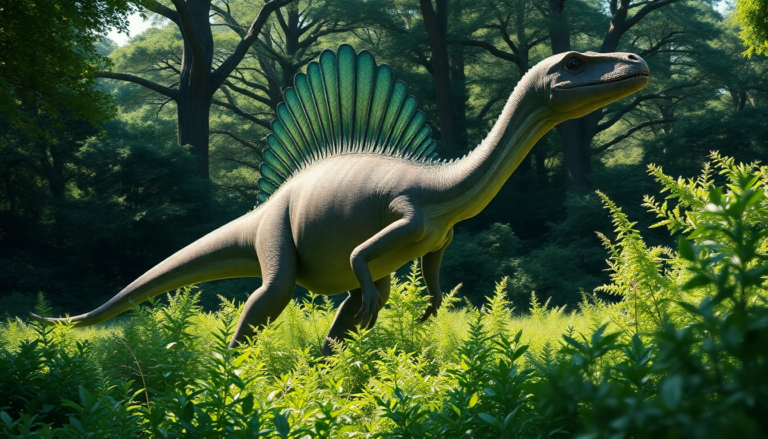
Scientists have just made a major discovery—meet the newly identified dinosaur species, Istiorachis macaruthurae. Unearthed on the stunning Isle of Wight, this iguanodontian dinosaur boasts a fascinating sail-like structure running along its back and tail, which might have been used to attract mates.
The research, spearheaded by Jeremy Lockwood, a PhD student at the University of Portsmouth and the Natural History Museum, has opened a window into the lives of these ancient creatures.
Discovery and Naming
Dating back about 125 million years, the fossils of Istiorachis macaruthurae have a unique story behind their name.
Lockwood decided to pay tribute to the Isle’s renowned sailor, Dame Ellen MacArthur, who made headlines in 2005 by setting the world record for the fastest solo non-stop voyage around the globe. The name “Istiorachis” translates to “sail spine,” while “macaruthurae” nods to Dame Ellen’s surname.
Isn’t it fascinating how a name can encapsulate both history and biology?
Before Lockwood’s research, these fossils were thought to belong to one of the two known iguanodontian species from the Isle of Wight. Lockwood remarked, “While the skeleton wasn’t as complete as some others that have been found, no one had really taken a close look at these bones before.” His meticulous examination highlighted distinct features that set this species apart. What secrets might these ancient bones still hold?
Unique Features and Evolutionary Significance
The standout characteristic of Istiorachis is those impressively long neural spines found in its fossils. This anatomical trait suggests the dinosaur likely had a prominent sail-like structure along its back. In his study, published in the scientific journal *Papers in Palaeontology*, Lockwood delved into how these features fit into the broader narrative of evolutionary biology.
He explained, “Evolution sometimes seems to favor the extravagant over the practical. While the exact purpose of such features has long been debated, researchers believe that the most likely explanation in this case is visual signaling, possibly as part of a sexual display.” This theory aligns with behaviors we see in modern reptiles, where males often flaunt sail-like structures to attract mates or assert dominance. Can you imagine how magnificent these creatures must have looked?
Research Methodology and Findings
To uncover the evolutionary significance of Istiorachis‘ sail, researchers compared its fossilized bones against a database of similar dinosaur backbones. Lockwood pointed out, “We showed that Istiorachis’s spines weren’t just tall—they were more exaggerated than is usual in Iguanodon-like dinosaurs, which is exactly the kind of trait you’d expect to evolve through sexual selection.”
Professor Susannah Maidment from the Natural History Museum applauded Lockwood’s thorough approach, stating, “Jeremy’s careful study of fossils that have been in museum collections for several years has brought to life the iguanodontian dinosaurs of the Isle of Wight.” She emphasized the need to preserve fossil specimens for ongoing research, offering valuable insights into Early Cretaceous ecosystems in the UK. What other mysteries could these preserved relics reveal?
As scientists continue to explore the significance of this groundbreaking discovery, it’s clear that Istiorachis macaruthurae not only enriches our understanding of iguanodontian diversity but also paves the way for further research into the evolutionary adaptations of dinosaurs. What exciting revelations lie ahead in the world of paleontology?
