

Protesters in London are preparing for a large-scale demonstration against the ban on Palestine Action, set for September 6, and are urging attendees to withhold their personal details from police.
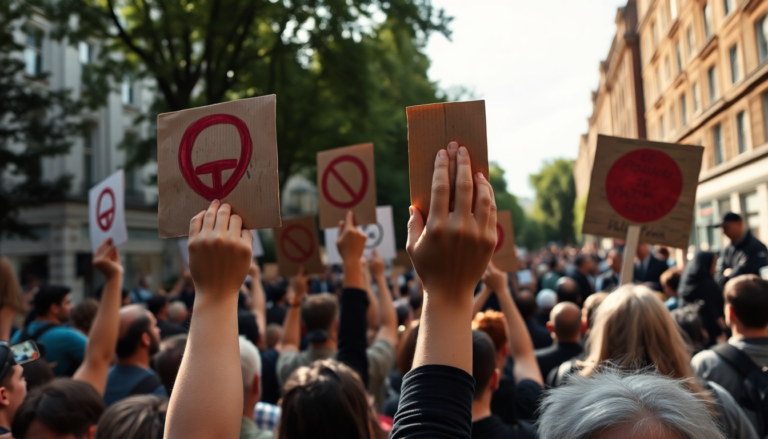
On September 6, a wave of protesters is set to hit the streets of London, rallying against the ban on Palestine Action. Organizers are urging everyone to keep their personal information under wraps when it comes to law enforcement. Why? This strategy aims to make it “practically impossible” for police to arrest everyone involved.
Sounds like a bold move, doesn’t it?
Protest Strategy and Goals
The pressure group Defend Our Juries is leading the charge, hoping to gather at least 1,000 participants for what’s expected to be the largest protest against the Palestine Action ban since it was introduced in June.
A spokesperson for the group put it bluntly: “With all the real challenges facing the country, it’s crazy that the Labour government has generated a political crisis over people quietly holding cardboard signs against genocide in Parliament Square. This won’t be forgotten.”
Right now, over 2,500 individuals have shown interest in attending the demonstration.
At a previous event organized by Defend Our Juries in Parliament Square, hundreds turned out, resulting in 532 arrests. Among those detained was Sir Jonathon Porritt, who described his arrest as a “privilege.” Most arrests were made under Section 13 of the Terrorism Act for holding supportive placards. Can you imagine the scene?
Conditions for Participation
For those looking to join the protest, there’s a prerequisite: signing an Action Briefing Document. This document spells out potential risks, making it clear that participants should be prepared for the possibility of arrest or other legal repercussions. It even advises against complying with street bail procedures, encouraging protesters to resist giving personal details to the police.
The briefing states, “If the police want to arrest us, they ought to do so properly.” This approach of strategic non-compliance aims to ramp up pressure on law enforcement, ensuring that if they refuse to provide their details, officers will have to transport them to police stations for processing. It’s a clever tactic, don’t you think?
Background on the Ban and Implications
This ban on Palestine Action came into play after a major incident on June 20, when two Voyager aircraft at RAF Brize Norton were damaged, resulting in an estimated £7 million in damages. Home Secretary Yvette Cooper condemned the vandalism, calling it “disgraceful” and highlighting the group’s “long history of unacceptable criminal damage.” Now, mere membership or support for Palestine Action could lead to criminal penalties of up to 14 years under the Terrorism Act of 2000. That’s quite a hefty consequence!
As protests ramp up, a High Court challenge regarding the ban is set for November. Amnesty International UK is also voicing concerns over how peaceful protesters are treated, calling for no further legal actions against those arrested during demonstrations. Chief Executive Sacha Deshmukh stated, “Peaceful protest is a fundamental right. People are understandably outraged by the ongoing genocide being committed in Gaza and are entitled under international human rights law to express their horror.” This situation underscores the growing tensions surrounding political expression and civil rights in today’s UK climate. What does this mean for the future of protest and activism? Only time will tell.
