

Reflecting on the welcoming spirit of 2015, we delve into the lasting effects of Germany's migration policy.
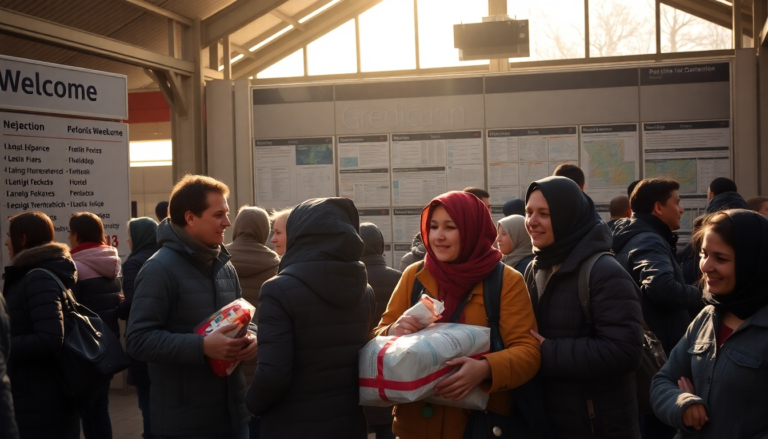
Can you believe it’s been ten years since Germany swung open its doors to refugees? It feels like just yesterday that the world was watching in awe as the nation transformed almost overnight, welcoming those fleeing war and persecution. It was a moment bursting with hope and promise, but also a decision that would send ripples across Europe in ways we could never have predicted.
🌍✨
The Welcoming Wave
Okay, but can we talk about 2015? Germany was in the midst of a humanitarian surge. The tabloid Bild was boldly declaring ‘Refugees Welcome’ as millions sought safety from conflict, especially in Syria. Picture this: balloons strung up on lampposts, warehouses overflowing with donations—clothes, toys, food—everything needed to support the influx of new arrivals.
It felt like a scene straight out of a movie, where kindness and empathy were the main characters. Did you ever think we could rally together like that? 💖
On August 25, 2015, Germany’s immigration ministry dropped a major announcement: Syrians fleeing their war-torn homeland would encounter few restrictions at the border.
Just days later, Chancellor Angela Merkel made her iconic statement, ‘Wir Schaffen Das’ or ‘We can do it.’ These weren’t just words; they were an invitation to the world. And wow, did people respond! Migrants from all corners of the globe began arriving, each one seeking safety and a new beginning.
The Reality of Migration
As I strolled through Berlin during this pivotal time, I couldn’t help but witness the incredible blend of hope and uncertainty. I met four young men from Damascus who dreamed of working as engineers at BMW. They were just a few among thousands, each with their own unique story. It was heartwarming, yet overwhelming. Who else felt that rollercoaster of emotions back then? 🎢
Germany welcomed over 1.1 million migrants that year—more than any other European nation. And it wasn’t just Syrians; people from Africa, the Middle East, and beyond joined the wave, all hoping to escape violence or poverty. Yet, with the rising numbers came rising tensions. Not everyone shared the same sentiment. Protests erupted across Germany and the UK, echoing fears of cultural dilution and security. 😟
Reflections on a Controversial Decision
Fast forward to today, and the echoes of that moment still resonate. Many are left questioning whether Merkel’s decision was a blessing or a curse. Her intent was to showcase compassion, but did it backfire? Public opinion has swung dramatically, with many Germans now feeling that the country took in too many migrants. It’s a stark reminder of how rapidly perceptions can shift. 🤔
And let’s chat about the ripple effects. The rise of right-wing parties in Germany highlights a significant shift in political sentiment. Just a decade ago, a tiny party like Alternative for Germany (AFD) was barely a blip on the radar; now, they’re polling at 26%. It’s wild to think about, right? How do you feel about the changes in the political landscape since then? 🗳️
Confronting the Legacy
As I reflect on those moments, I can’t help but wonder about the long-term implications. Did Merkel’s approach genuinely help those in need, or did it open a Pandora’s box of issues that Germany and the rest of Europe are still wrestling with? The debate around immigration is ongoing, with many advocating for stricter controls while others push for compassion.
This isn’t just about numbers or policies; it’s about real lives and real stories. Each migrant carries a narrative of struggle, resilience, and hope. As we look back on this decade, let’s not forget the lessons learned and the conversations that still need to happen. What do you think the future holds for migration in Europe? Share your thoughts! 💬 #MigrationMatters #RefugeesWelcome
