

The plight of Sudanese refugees in Chad reveals deep scars of trauma and ongoing violence, highlighting the urgent need for support.
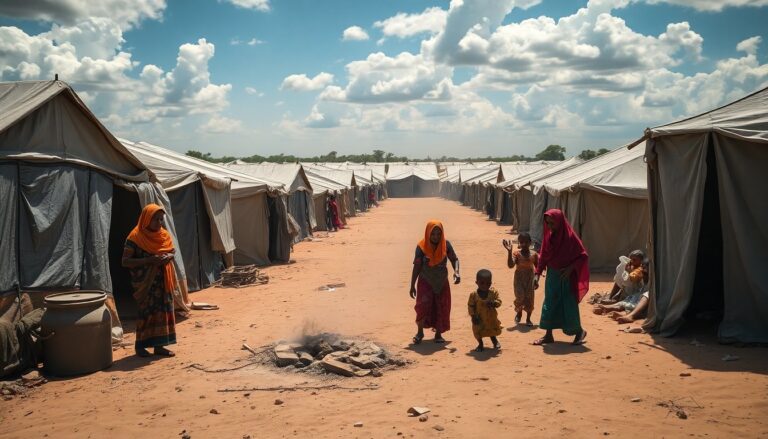
Amid escalating violence in Sudan, many are forced to flee their homes, only to face further challenges in countries like Chad. This is the reality for countless Sudanese refugees.
From Home to a Refugee Camp: A Heart-Wrenching Journey
Islam, a 22-year-old woman, experienced this harrowing journey firsthand.
An airstrike destroyed her family’s home in el-Geneina, Sudan, while she was studying for exams. After surviving the attack, she was kidnapped by the Rapid Support Forces (RSF), who subjected her to severe trauma.
She reflects, “If they had killed me, it would have been better than what they did to me.” After enduring two days of captivity and violence, she returned to find her home looted and her family shattered.
The strength required to survive such experiences is unimaginable.
Since conflict reignited in April 2023, nearly 13 million people have been displaced. Reports indicate alarming levels of sexual violence, with the RSF employing horrific acts to control communities. Currently, a quarter of Sudan’s population is at risk of gender-based violence, a devastating statistic.
Life in Adre: A Struggle for Safety and Dignity
Islam eventually reunited with her family in Chad. However, their makeshift shelter, constructed from scraps, starkly contrasts the life they once knew. Adre, a town designed for 40,000 residents, now houses over 235,000 refugees, stretching resources to their limits.
For women like Islam, daily life poses continuous dangers. She sells tea to support her family but often feels unsafe and demeaned. “You can’t even send a young girl to the market. She can be robbed or beaten,” she explains, highlighting the vulnerability faced by women in these dire circumstances.
Compounding these challenges are the encounters with Chadian security forces, who should protect refugees but often perpetuate violence. “You spoiled your country, and you’ve come to spoil ours,” they taunted, underscoring that trauma does not disappear across borders.
The Cycle of Trauma and the Quest for Justice
Roua, another young woman, lost her brothers in the violence and bears the scars of her trauma. “I wished I would die at that moment,” she shares, a heartbreaking testament to her suffering.
Women like Roua and Islam are not mere statistics; they represent real individuals navigating unimaginable horrors. As reports of sexual violence in refugee camps rise, the psychological toll is profound, leaving many women in constant fear and uncertainty. “It’s not just about the violence itself. It’s about losing hope again,” notes a mental health delegate, emphasizing the emotional impact of their experiences.
While seeking refuge, these women often find themselves ensnared in another cycle of violence, frequently at the hands of those meant to protect them. In 2024 alone, over 4,000 cases of gender-based violence were reported in Chad, highlighting the urgent need for awareness and advocacy.
Building Community Amidst Chaos
Islam, a 22-year-old woman, experienced this harrowing journey firsthand. An airstrike destroyed her family’s home in el-Geneina, Sudan, while she was studying for exams. After surviving the attack, she was kidnapped by the Rapid Support Forces (RSF), who subjected her to severe trauma.0
Islam, a 22-year-old woman, experienced this harrowing journey firsthand. An airstrike destroyed her family’s home in el-Geneina, Sudan, while she was studying for exams. After surviving the attack, she was kidnapped by the Rapid Support Forces (RSF), who subjected her to severe trauma.1
Islam, a 22-year-old woman, experienced this harrowing journey firsthand. An airstrike destroyed her family’s home in el-Geneina, Sudan, while she was studying for exams. After surviving the attack, she was kidnapped by the Rapid Support Forces (RSF), who subjected her to severe trauma.2
