

Farage's visit to the U.S. sparks controversy and political discourse in the UK.
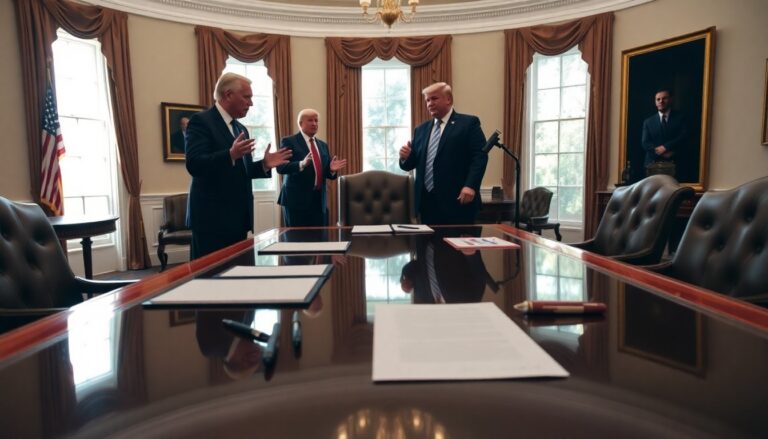
Nigel Farage, leader of Reform UK, was recently seen with former President Donald Trump during a trip to Washington, D.C. The meeting coincided with Farage’s testimony before the House Judiciary Committee, where he addressed civil liberties in the UK.
A photograph shared on social media shows Farage alongside Trump at the Resolute Desk, captioned, “It’s good to be back in the Oval Office.” This visit has sparked significant criticism back home.
Details of the Meeting
Farage shared a photograph with Trump on social media early Thursday, indicating his presence at the White House amid ongoing political debates in the UK.
His testimony before Congress aimed to highlight what he perceives as an erosion of free speech and civil liberties in Britain. During his appearance, Farage drew parallels between the UK and North Korea, citing recent legal actions against individuals for their comments on social media regarding transgender issues.
He referenced the arrest of Irish writer Graham Linehan and the sentencing of Lucy Connolly, a former childminder, stressing that these incidents reflect a troubling trend in the UK. Farage’s claims prompted strong reactions from U.S. lawmakers, particularly from Democrat Jamie Raskin, who criticized him as a “Putin-loving free speech impostor and Trump sycophant.”
Raskin urged Farage to express his concerns in the UK Parliament rather than in the U.S., suggesting that his absence from Prime Minister’s Questions was unpatriotic. “He should go and advance the positions he’s taking here in Congress today, in Parliament,” Raskin asserted. This criticism underscores the ongoing tensions surrounding Farage’s political maneuvers.
Political Reactions
Prime Minister Sir Keir Starmer also weighed in on the controversy during Prime Minister’s Questions, condemning Farage’s absence from parliamentary duties. Starmer stated that Farage had traveled to America to “badmouth” the UK and implied that such actions are detrimental to national interests. He labeled Farage’s stance as disgraceful and unpatriotic, reinforcing the divide between Farage’s political rhetoric and mainstream political views.
In response, Farage dismissed the criticisms, emphasizing his commitment to free speech. “You can say what you like, I don’t care, because that’s what free speech is,” he countered. His comments reflect a broader narrative among his supporters who view his actions as a defense of civil liberties against government overreach.
The political landscape in the UK continues to evolve, with Farage’s visit to the U.S. serving as a flashpoint for discussions about freedom of expression and the role of government in regulating speech. As debates intensify, the implications of Farage’s testimony and the subsequent political fallout will likely resonate throughout the UK political arena.
Timeline of Events
- Wednesday:Farage testifies before the House Judiciary Committee.
- Thursday:Farage posts photo with Trump, sparking media attention.
- Prime Minister’s Questions:Starmer criticizes Farage for missing parliamentary duties.
- Ongoing:Political reactions continue to unfold in the UK media.
As the story develops, it remains to be seen how Farage’s actions will affect his political standing and the wider discourse on civil liberties in the UK.
