

What happens when federal forces roll into a city? Chicago is about to find out, and it’s stirring up some serious conversations.
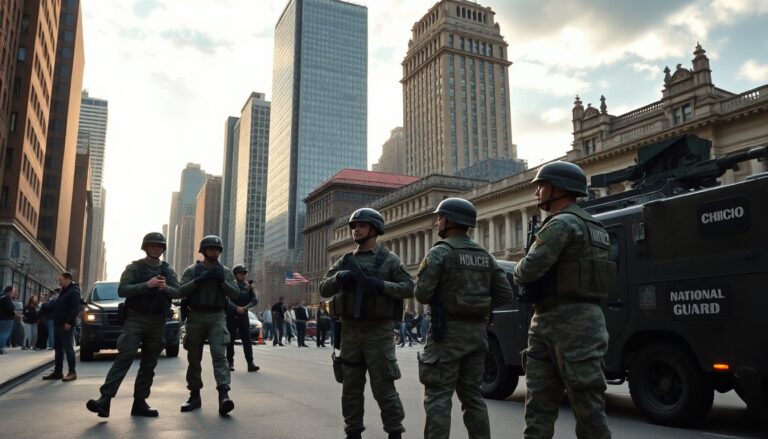
The situation in Chicago is escalating as the National Guard is set to be deployed, a decision that has sparked significant controversy. This deployment raises critical questions about community trust, policing practices, and the extent of federal authority.
What is the National Guard deployment about?
President Trump has announced that the National Guard will be deployed in Chicago as part of a broader strategy to combat crime and immigration. Reports suggest that the deployment could occur as soon as this weekend, with troops prepared to mobilize by Saturday.
However, local leaders have expressed strong opposition to this move.
Illinois Governor JB Pritzker has referred to the National Guard’s presence as an “invasion” and has stated that he was not adequately informed about the decision. Chicago Mayor Brandon Johnson has also taken a stand, issuing an executive order directing local police not to cooperate with National Guard troops or federal agents, highlighting a significant power struggle.
In a notable response, Mayor Johnson has requested that federal agents forgo masks and instead wear body cameras. This request underscores the importance of transparency and trust, particularly given the history of “military-style” raids that have strained relationships between communities and law enforcement.
Historical context and community response
The National Guard has a complex history in the United States, originating from colonial militias. Today, it is deployed for various purposes, including disaster response and civil unrest. However, its current use in Chicago is perceived by many as a political tactic rather than a genuine public safety initiative.
Community reactions have been mixed, with some residents voicing concerns that this deployment represents an overreach of federal authority into local matters. There are fears that it may exacerbate divisions rather than foster healing within communities.
Moreover, the narrative surrounding crime in Chicago is multifaceted. Despite the city’s reputation for high crime rates, recent statistics indicate an overall decline in crime. Mayor Johnson has cited a 21% reduction in crime rates, prompting questions about the necessity of federal troops. This situation raises concerns about the implications of “over-policing” and the underlying motivations behind such actions.
The ripple effect of federal intervention
Examining the broader implications, the National Guard has been deployed in other cities, including Los Angeles and Washington, DC, under similar circumstances. Each instance has been met with resistance from local officials and residents. In Los Angeles, Governor Gavin Newsom characterized the deployment as “political theatre,” illustrating the complex power dynamics at play between federal and state authorities.
Legal experts have voiced concerns that such deployments could contravene laws like the Posse Comitatus Act, which restricts military involvement in civilian law enforcement. A recent court ruling deemed the Los Angeles deployment illegal, sparking discussions about potential overreach by the federal government.
As developments unfold in Chicago, it is crucial to monitor the impact on community-police relations. Will this intervention prove effective in reducing crime, or will it further deepen existing divides? Community input is vital in these discussions, and public opinion will play a significant role in shaping the future of policing in urban areas.
