

Are we witnessing the early signs of a civil war in the UK? Steve Bannon's recent comments have ignited a heated discussion on national identity and societal unrest.
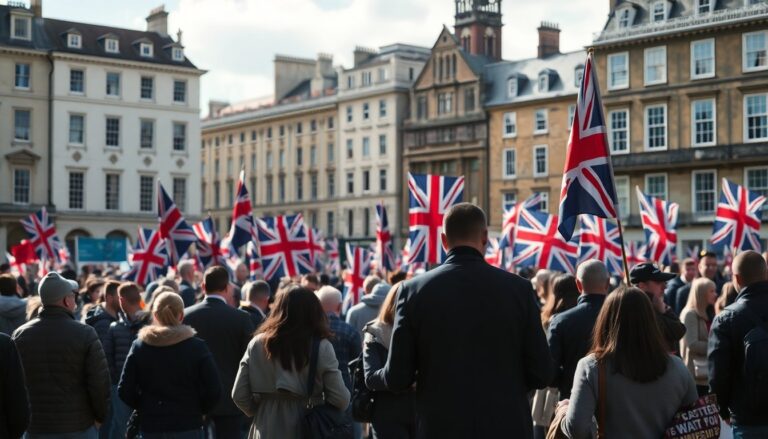
Recent comments by Steve Bannon, the former chief strategist for Donald Trump, have ignited significant debate. He claims the UK is “heading to a civil war” due to what he describes as the rise of “radical Islam.” This statement raises important questions: Is this a legitimate concern or merely fear-mongering?
What Did Bannon Say?
During a gathering of America First supporters, Bannon expressed his views candidly. He pointed to protests and the increasing display of national flags as indicators that the UK is at a pivotal moment. Bannon stated, “England is heading to a civil war as we speak.” He attributes this potential unrest to unresolved issues related to radical Islam.
Bannon also highlighted financial instability in Europe, noting that the bond markets appear volatile. He suggested that this economic uncertainty could lead bankers to question the region’s future. This raises a provocative question: Can financial concerns genuinely contribute to civil unrest?
Furthermore, Bannon criticized London Mayor Sadiq Khan, especially in the context of the upcoming New York mayoral election, where a leftist candidate is anticipated to win.
He appears to link political leadership directly to societal challenges. But is it reasonable to hold leaders accountable for the nation’s state, or does this oversimplify complex issues?
Rising National Tensions
The UK has experienced unsettling events in recent months, including protests that have escalated into violence, particularly around hotels housing asylum seekers. Bannon’s remarks coincided with a notable increase in national flag displays, especially after Birmingham Council removed flags without proper authorization. This situation reflects a deeper struggle over national identity.
Additionally, a recent criminal case involving Ethiopian national Hadush Gerberslasie Kebatu, convicted of sexually assaulting a minor, has intensified anti-immigrant sentiment, leading to protests near asylum seeker accommodations. This complex web of emotions, politics, and public safety suggests that these incidents may be just the beginning.
The Bigger Picture: Is It Really a Civil War?
While Bannon’s rhetoric may seem exaggerated, it prompts critical discussions about national identity and cultural unity. Are we genuinely on the verge of something catastrophic, or are we simply witnessing societal adjustments amidst change? Bannon mentions that only Hungary and Poland have resisted this transformative wave, adding another dimension to the conversation.
As we explore this topic further, it is essential to consider the role of media and political discourse in shaping our perspectives. Is Bannon’s alarmism a reflection of his ideology, or does it contain elements we need to confront? Are we indeed inching towards a civil war, or is it time to foster more constructive dialogues?
The situation in the UK is undoubtedly intricate. Bannon’s controversial assertions spark a necessary conversation. What are your thoughts on the matter?
