

The US Open's decision to censor reactions to Trump raises questions about free speech and fan expression.
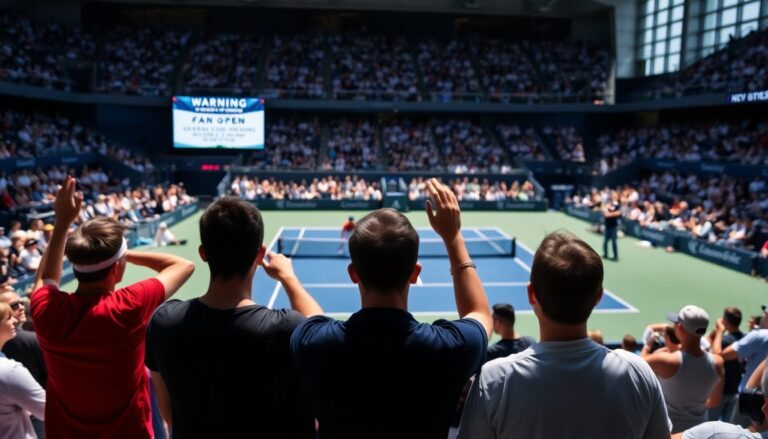
The recent directive for broadcasters to censor any protests or reactions during President Donald Trump’s attendance at the US Open men’s singles final has sparked significant debate. This situation recalls previous instances where sports and politics intersected in unexpected ways.
What implications does this have for fans and the integrity of live broadcasting?
Broadcasting Restrictions: A Closer Look
The United States Tennis Association (USTA) has instructed broadcasters, including Sky Sports, to avoid showcasing any disruptions or protests during Trump’s appearance.
This marks his first visit to the US Open since 2015, when he received a notably cold reception in a predominantly Democratic area.
The USTA’s directive raises critical questions about free speech and the media’s role in covering political events.
Reports of broadcasters editing out reactions, similar to allegations during the Super Bowl earlier this year, suggest an attempt to control the narrative surrounding Trump’s presence. Does this set a dangerous precedent for live sports coverage?
Fans play a crucial role in any sporting event, and their reactions can be just as significant as the competition itself. If broadcasters are required to censor these responses, what does this mean for the authenticity of the viewing experience? Are audiences witnessing a genuine event, or merely a sanitized version of reality?
Fan Reactions and the Power of Mobile Footage
Despite censorship orders, mobile phones will likely capture the genuine emotions and reactions of fans in attendance. Even if broadcasters sanitize the coverage, authentic moments shared on social media platforms will provide a counter-narrative. Will mobile footage become the new source of truth amid censorship?
This situation raises a broader question: what level of control should organizations exert over public sentiment during events? Many fans are expressing concerns about the integrity of sports broadcasting. How do we balance the right to protest with the desire for a seamless event? This is a vital conversation to engage in.
The Overall Impact on Sports and Society
The US Open’s handling of Trump’s attendance reflects a broader trend of intersection between sports, politics, and media. This scenario could catalyze more significant discussions about censorship and free speech across various aspects of life, extending beyond sports. With social media amplifying voices like never before, fans now have platforms to share unfiltered thoughts and experiences, irrespective of broadcast choices.
As we approach the final, it is essential to observe how this situation unfolds. Will fans’ voices transcend censorship? Will there be a surge in digital expressions as individuals share their experiences online? Regardless of the outcome, the discourse surrounding censorship in sports is just beginning. Are you prepared to engage in this important dialogue?
