

The arrest of hundreds of South Korean workers in the US has sparked significant political and diplomatic tensions.
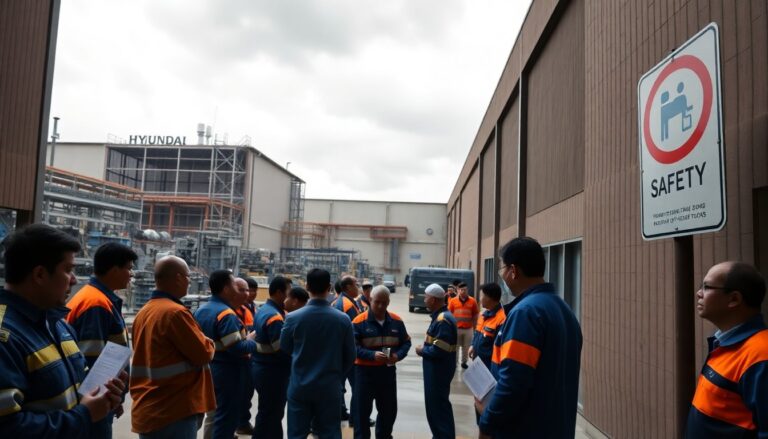
The recent immigration raid at a Hyundai Motor-LG factory in Georgia has deeply affected the South Korean community. Over 300 South Korean nationals were among the 475 workers detained, raising significant concerns. This incident has sparked a political outcry, prompting immediate responses from the South Korean government.
What are your thoughts on the implications of this situation? Let’s explore the details.
What Happened at the Hyundai-LG Factory?
On Thursday, U.S. immigration authorities executed a large-scale raid at a plant near Savannah, Georgia, targeting workers suspected of violating immigration laws.
This operation, led by Immigration and Customs Enforcement (ICE), is reported to be the largest single-site enforcement action in recent memory. South Korean Foreign Minister Cho Hyun expressed profound concern, emphasizing the need to uphold the rights of South Korean nationals.
How did we arrive at this point?
ICE officials defended the detentions, claiming some individuals had crossed the border illegally, while others held work visas that restricted their employment. This situation raises critical questions about the effectiveness of current immigration policies and their impact on communities. The narrative surrounding immigration is complex, and this incident has intensified the ongoing debate.
Political Repercussions in South Korea
In South Korea, the opposition party is responding forcefully. The People Power Party (PPP) has condemned the detentions as a ‘grave matter’ that could jeopardize South Korean businesses abroad. PPP Chairman Jang Dong-hyeok warned that this incident might have broader repercussions for Korean communities in the United States. Could this lead to a more significant diplomatic rift?
The criticism is aimed at President Lee Jae-myung’s administration, which faces accusations of failing to protect its citizens overseas. The PPP questions the effectiveness of the ‘pragmatic diplomacy’ that promised much during discussions with U.S. officials but has resulted in this enforcement action. The trust built through investments appears to be eroding under the strain of immigration enforcement. What is your perspective on the balance between immigration control and the protection of foreign nationals?
Corporate Responses and Future Implications
Hyundai and LG Energy Solution have both issued statements indicating they are closely monitoring the situation. Notably, Hyundai clarified that none of the detained workers were directly employed by them. Companies often find themselves navigating the complexities of political tensions. How might this situation impact their operations in the United States moving forward?
Furthermore, the incident prompts questions regarding the future of South Korean investments in the U.S. With substantial resources invested in building factories to evade tariffs and access the market, will companies reconsider their strategies if the safety of their workers is at risk? Let’s discuss how this incident could reshape international business relations and the perception of South Korea within the U.S. market.
As this situation develops, it is crucial to remain informed and engaged. What are your thoughts on the appropriate response from the South Korean government? Your insights could initiate an important conversation.
