

After months of protests, Serbians are louder than ever in their demands for change and accountability. What’s driving this unrest?
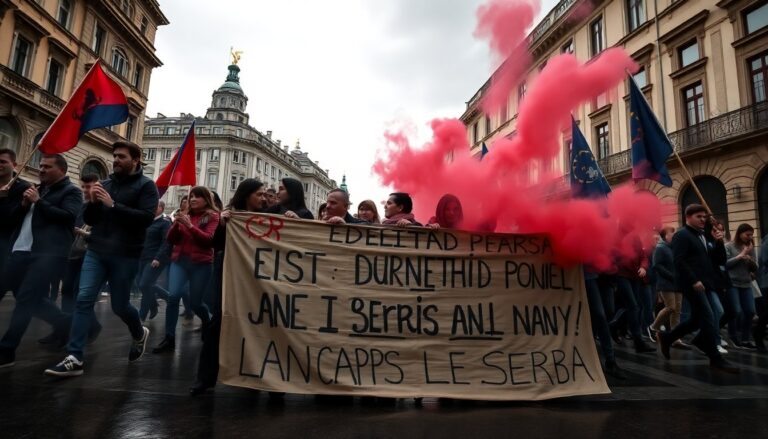
Protests have erupted across Serbia, reflecting a deep-seated discontent with government corruption. For the past 10 months, citizens have rallied following a tragic event that has galvanized their frustrations. This article examines the unfolding situation and its implications.
The Tragic Catalyst
In November 2022, the roof of the Novi Sad train station collapsed, resulting in the deaths of 16 individuals. This incident highlighted significant concerns regarding government negligence in public infrastructure projects. Many citizens view this tragedy as emblematic of broader issues within the government.
Since the collapse, protests have surged throughout Serbia. Demonstrators are calling for accountability and demanding early elections to remove President Aleksandar Vucic, who has held power for over a decade. The rallying cry of “Vucic leave” resonates in the streets, signaling a strong desire for political change.
Recent protests in Novi Sad escalated when police used tear gas and stun grenades to disperse crowds. This response underscores the intensity of public sentiment. However, a noteworthy aspect is that many protests have remained peaceful, indicating a complex emotional landscape among the demonstrators.
Government Response and Public Sentiment
In a recent address, President Vucic reported that 11 police officers were injured during the protests. However, there were no clear reports regarding the number of injured protesters, raising concerns about transparency. Vucic has dismissed the protests, alleging foreign interference, a claim that many view as unfounded.
Vucic’s administration faces numerous allegations, including connections to organized crime and suppression of media freedoms. Public dissent is growing, with students, activists, and opposition groups demanding justice and accountability. The mobilization of the community reflects a significant shift in public sentiment.
The government has not remained passive in response to the protests. Counter-rallies have been organized to demonstrate strength and support for the administration. The situation resembles a strategic game, with high stakes for both the government and the people.
Looking Ahead: What’s Next for Serbia?
As protests continue, the critical question remains: what will happen next? Will the government heed the voices of the people, or will unrest escalate further? The atmosphere is charged with tension, and many are hopeful for a resolution.
For the citizens of Serbia, this struggle transcends a single incident; it embodies a broader demand for systemic change. They seek a government that is responsive and a future that is secure. Through their protests, they are demonstrating resilience and determination.
The ongoing protests raise important discussions about the nature of governance and accountability. What do you think? Are these protests a necessary step toward meaningful change, or do they risk descending into chaos? We invite you to share your thoughts in the comments below.
