

The ongoing Tube strike in London has left commuters facing a chaotic evening rush hour, with services nearly at a standstill.
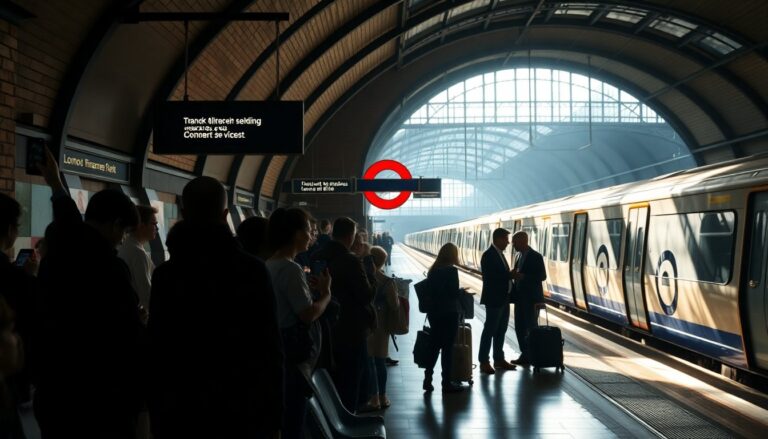
UPDATE AT 18:00: The ongoing Tube strike in London has left commuters facing significant delays during the evening rush hour. As of Thursday evening, the majority of the London Underground network is shut down due to industrial action by the RMT union, which is advocating for better pay and working hours.
Only the Piccadilly line is operating on a limited basis, while the Docklands Light Railway (DLR) is completely suspended.
Details of the Disruption
Thursday marks the final day of a five-day series of walkouts by RMT workers. The strike has severely disrupted public transportation, creating a ripple effect on the city’s travel infrastructure.
Commuters are urged to seek alternative travel routes, but options remain limited. Reports indicate that even overground services are experiencing delays, with Southern rail services facing disruptions due to a points failure affecting routes between Reigate and London Victoria.
AGGIORNAMENTO ORE 18:00: Commuters should expect a reduced service on all London Underground lines tomorrow, with the Tube scheduled to open late at 8 AM.
A normal service is anticipated to resume by midday.
Interestingly, ride-hailing company Bolt has reported a substantial 110% spike in trips to hospitals as people scramble for alternative transport during the strike. The greatest increases in demand were noted at Guys and St Thomas’ Hospital, Royal London Hospital, and St Mary’s Hospital, indicating that the strike is not only causing inconvenience but also affecting access to essential services.
Impact on Pedestrians and Cyclists
As the strike continues, the surge in commuters opting for bicycles has raised safety concerns, particularly for visually impaired individuals. Chris Theobald from Guide Dogs UK expressed urgent worries about the rising number of shared bikes obstructing pathways, complicating safe passage for those with sight loss. “The surge in e-bike and scooter use during strike week risks making a bad situation even worse for people with sight loss,” Theobald stated.
The increasing presence of bicycles on the streets has led to greater congestion, particularly in busy pedestrian areas, exacerbating the difficulties faced by vulnerable individuals. Theobald criticized rental companies for inadequate measures to manage their vehicles effectively, arguing for stronger regulations to ensure public safety.
Hospitality Sector Suffers
The hospitality industry in London is also feeling the effects of the Tube strike. Recent data reveals a staggering 67% drop in bookings across the capital’s venues from Monday to Thursday compared to the previous week. Walk-ins have decreased by 68%, and the number of cancellations has surged, with bars and restaurants reporting a 54% reduction in no-shows.
Leighanne Bent of Access Hospitality remarked, “The data paints a clear picture: when London’s transport network grinds to a halt, so does its social scene.” This analysis highlights the interconnectedness of transportation and the city’s vibrant hospitality sector, indicating that prolonged disruptions could have long-term economic implications.
As the strike draws to a close, TfL’s lead negotiator, Nick Dent, has invited RMT representatives to peace talks next week, hoping to resolve the ongoing conflict. This move represents a potential thaw in negotiations after a week of heightened tensions and service disruptions.
