

The ongoing strikes are causing significant travel chaos in London as commuters struggle with disrupted transport services.
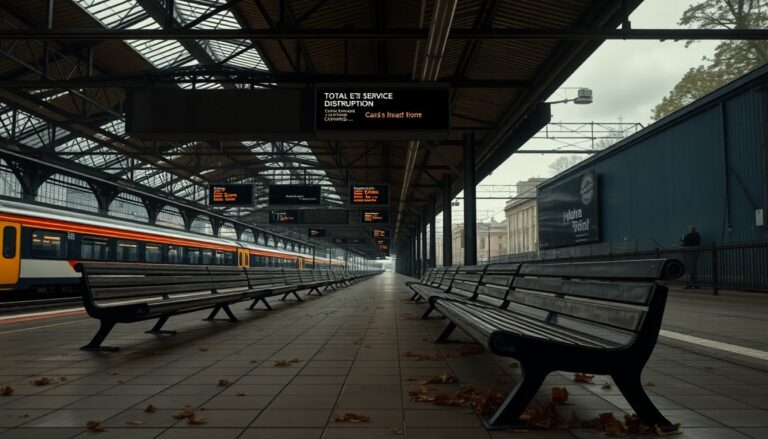
Commuters in London are facing another day of travel disruption as the Rail, Maritime and Transport (RMT) union’s strike continues. Both the London Underground and the Docklands Light Railway (DLR) are fully suspended as the city enters the morning rush hour on Thursday.
This marks the final day of five consecutive strike days, significantly affecting transport services across the capital.
Strike Action Details
The RMT union is in dispute with Transport for London (TfL) over pay and working hours, prompting this week’s walkouts.
General Secretary Eddie Dempsey stated, “We take no pleasure in causing disruption but we make no apology for fighting for our members.” The union has rejected a 3.4% pay offer and is pushing for a reduction in the standard 35-hour workweek, which TfL has deemed financially unfeasible.
Additionally, the Elizabeth Line is impacted, with early morning services skipping several stations between Whitechapel and Paddington. However, the line is reportedly operating normally through central London, providing essential connectivity despite disruptions. TfL confirmed that while some stations are closed, a reasonable service is being maintained in the central area.
Current Impact and Commuter Experience
UPDATE AT 08:00: A section of the Piccadilly Line has reopened, allowing trains to run between Acton Town and South Harrow. Nonetheless, the majority of the Tube network remains non-operational, forcing commuters to seek alternative transportation methods such as buses and bicycles. Londoners are using bikes in unprecedented numbers, with an estimated two million trips taken on Monday alone, according to London’s cycling commissioner.
Despite the alternative transport options, the disruptions have caused significant delays and overcrowding on remaining services. Commuters have expressed frustration over the lack of effective communication from TfL regarding service availability and future negotiations. The RMT and TfL have not met for talks since prior to the strike, raising concerns about the likelihood of further strikes if an agreement is not reached.
Future Outlook and Recommendations
Looking ahead, commuters are left questioning whether this will indeed be the last day of disruptions. Dempsey has urged Mayor Sadiq Khan to intervene and facilitate discussions to resolve the ongoing issues. Without proactive engagement from both sides, the possibility of further industrial action looms large.
In conclusion, the current strikes reflect underlying tensions within London’s transport system. Commuters are advised to stay informed through TfL updates and consider alternative travel arrangements as the situation evolves. The city awaits further news as both the union and TfL prepare for what could be another challenging day for London’s public transport.
