

What happens when an ally turns into a source of outrage? The recent deportation of South Korean workers from the US raises serious questions about international relations.
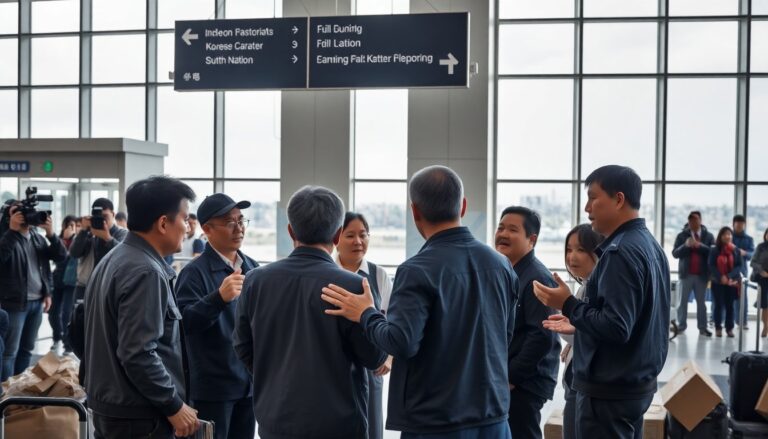
Recent developments regarding the deportation of South Korean workers in the United States have sparked significant international concern. This incident has raised questions about the stability of US-South Korea relations.
Events Unfold
A chartered flight recently arrived in Incheon, South Korea, carrying over 310 workers who were detained during a major immigration raid at a Hyundai-LG battery plant construction site in Georgia.
This raid, described as the largest single-site operation since the Trump administration intensified immigration enforcement, has led to widespread outrage among South Koreans.
The treatment of these workers has prompted a strong negative reaction, with images of individuals in handcuffs amplifying feelings of betrayal.
Protests erupted at the airport, featuring demonstrators expressing their anger toward the US government. One notable sign read, “You told us to invest, only to arrest us! Is this how you treat an ally?”
South Korean President Lee Jae-myung characterized the raid as “bewildering,” emphasizing that this situation is not merely a minor diplomatic issue, but one that could have serious repercussions for future investments between the two nations.
There are concerns that this incident may deter other companies from investing in the United States.
Political Fallout and Public Opinion
In an unusual display of political unity, South Korean politicians from various parties have condemned the treatment of the detained workers. Recent polls indicate that approximately 60% of South Koreans disapprove of the raid, with many fearing the long-term impact of this incident on bilateral relations.
Industry leaders are also expressing concern, as the arrests are expected to delay the construction of the $4.3 billion battery facility. Labour groups in Seoul are demanding accountability, including an apology from the Trump administration, which they argue represents a violation of human rights. This incident illustrates how a single immigration raid can provoke widespread outrage and calls for justice.
The Diplomatic Dance Continues
As discussions continue, it is noteworthy that the South Korean government successfully negotiated with the Trump administration to allow the workers to return voluntarily, avoiding re-entry restrictions. This indicates that while the diplomatic relationship may be strained, it is not irreparable.
Al Jazeera’s reporter Jack Barton noted that the South Korean government’s influence in discussions with US officials highlights the ongoing significance of their diplomatic ties. However, if this situation is not managed effectively, it could alter South Korean perceptions of their relationship with the US.
In conclusion, this incident raises critical questions about the future of US-South Korea relations. Is this a pivotal moment or merely a temporary setback? The discussion is open for debate.
