

The UK economy showed no growth in July, raising alarms about Chancellor Rachel Reeves's economic strategy.
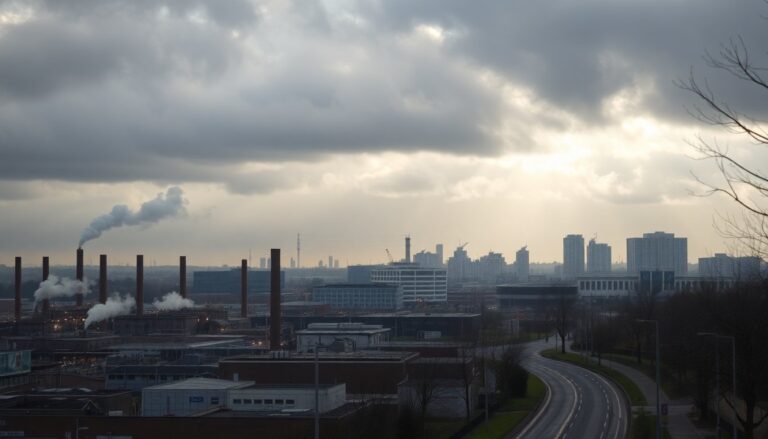
UPDATE AT: The UK economy has reached a standstill, as new GDP figures released today show no growth during July. This stagnation places considerable pressure on Chancellor Rachel Reeves, with economists warning of potential tax increases in the upcoming Budget.
Major sectors, particularly industrial and manufacturing, have faced significant challenges, contributing to these disappointing results.
Economic Overview
According to the Office for National Statistics, the GDP performance for July remained flat, following a 0.4% increase in June. The three-month average growth rate currently stands at 0.2%, while year-on-year growth is slightly below forecasts at 1.4%.
The industrial and manufacturing sectors reported declines of 0.9% and 1.3%, respectively, highlighting the ongoing difficulties faced by the economy.
Despite these setbacks, the construction sector provides a glimmer of hope, showing a 2.4% rise in output.
However, the overall economic landscape remains bleak. Economists attribute the stagnation to previous tax hikes and the looming threat of additional tax increases. A Treasury spokesperson stated, “We know there’s more to do to boost growth… it does feel stuck.” They emphasized ongoing efforts to reverse years of underinvestment, though skepticism persists regarding the effectiveness of these measures.
Market Reactions and Stock Performance
In response to the flat GDP figures, the FTSE 100 index experienced mixed movements. Strong performances from mining stocks offset disappointments in other sectors. The index rose by 0.3% or 27.94 points, reaching 9325.52, just shy of its intraday record. Mining giants like Glencore and Antofagasta led this charge, reflecting robust demand for commodities.
Conversely, UK retailers faced significant struggles due to the economic climate. Major retailers such as Marks & Spencer and Sainsbury’s reported declines in their stock prices. The retail sector grapples with soaring operational costs and the potential for increased business rates, which could lead to further store closures. Analysis from the BRC warns that 400 large-format stores could be at risk if included in higher tax bands.
Future Economic Outlook
Looking ahead, the economic outlook remains uncertain. The Bank of England is expected to maintain interest rates at 4% for the remainder of the year, although some analysts predict a potential cut to 3% next year as inflation pressures ease. Capital Economics suggests that the economy is still growing, albeit at a sluggish pace, hindered by previous tax increases and ongoing global economic challenges.
Deutsche Bank forecasts a modest growth rate of around 1.2% in 2025, with risks skewed toward the downside, particularly due to the impact of the US trade war and persistent domestic inflation. These factors are likely to keep consumer spending subdued in the coming months.
As the UK economy navigates these challenges, the government faces increasing pressure to implement effective strategies to stimulate growth. The coming weeks will be critical in determining the economy’s direction, with the upcoming Budget set to reveal key policy decisions.
