

With tensions escalating in Eastern Europe, the Zapad 2025 drills raise crucial questions about security and military readiness. Let's discuss!
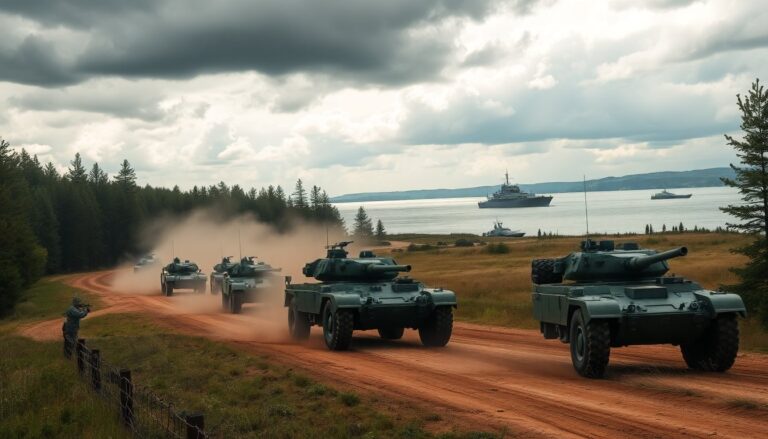
Recent military exercises between Russia and Belarus, known as Zapad 2025, have raised significant concerns across Europe. The drills commenced on September 8 and are scheduled to conclude on September 16, taking place near the NATO border amidst heightened geopolitical tensions.
The Zapad 2025 Military Drills
The Russian Defense Ministry has announced that these exercises will not only occur on land but also at sea, specifically in the Baltic and Barents Seas. This extensive operation has drawn attention due to its scale and implications.
Of particular concern is the reported practice of nuclear weapon deployment and testing of new ballistic missiles. Such activities evoke memories of the Cold War era, raising alarms among global security analysts.
Adding to the tension, a recent drone incursion into Polish airspace has been labeled a deliberate provocation by several European leaders.
This incident has intensified fears that the ongoing conflict in Ukraine might escalate into a broader confrontation. While the Russian military claims it did not target Poland, skepticism remains about the actual intentions behind these maneuvers.
In response to these developments, nations including Poland, Lithuania, and Latvia have increased their security measures. Poland has notably closed its border with Belarus for the duration of the exercises, a significant action reflecting rising tensions. Polish Prime Minister Donald Tusk has cautioned that the situation may be more precarious than it has been since World War II.
Historical Context and Current Implications
Historical precedents for similar drills are alarming. In 2021, a substantial troop buildup during a comparable exercise preceded the invasion of Ukraine. The current situation evokes a sense of déjà vu, prompting NATO to remain vigilant.
Analysts speculate that these drills may serve as a test of NATO’s response capabilities, likening it to a strategic game of chess where every move can have significant consequences. The geopolitical stakes are undeniably high, especially with the ongoing conflict in Ukraine.
Although the Russian government characterizes these exercises as routine, the involvement of tactical nuclear weapons fundamentally alters the context. Observers are left questioning whether these actions are a strategic signal from Russia or merely coincidental.
What’s Next for NATO and Europe?
NATO is closely monitoring Russia’s actions in light of these developments. German defense officials have affirmed their heightened alert status, which appears prudent given the current circumstances. Major General Agostinho Costa articulated that these exercises signify Russia’s readiness to escalate conflicts, including to a nuclear level, if provoked.
In parallel, Poland and its allies have announced their own counter-drills, complicating an already tense situation. This military buildup raises questions about the necessity of such preparations and their potential to exacerbate existing tensions.
The Russian Defense Ministry has announced that these exercises will not only occur on land but also at sea, specifically in the Baltic and Barents Seas. This extensive operation has drawn attention due to its scale and implications.0
