

London saw massive protests as groups clashed over immigration and free speech, leaving many questioning the narrative around these divisive issues.
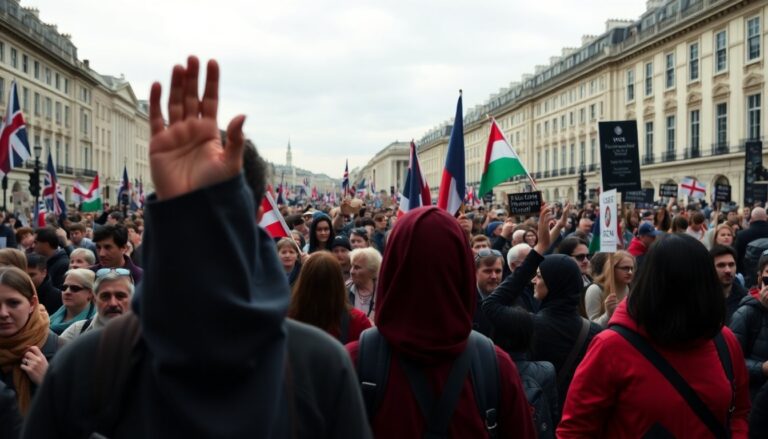
Protests in London: A Reflection of Growing Tensions
On a recent day in London, tens of thousands of individuals participated in two significant protests, highlighting increasing tensions surrounding immigration and free speech in the UK.
The Scale of the Protests
The Metropolitan Police estimated that approximately 110,000 people attended the ‘Unite the Kingdom’ rally, organized by controversial figure Tommy Robinson. Protesters marched from two directions toward Whitehall, adjacent to the UK Parliament.
The atmosphere was charged, with flags waving and chants resonating in the air.
Among the attendees were supporters of the far-right Reform UK party, which has gained traction in recent months. Robinson characterized the event as a celebration of free speech and British culture. However, many observers view it as a rallying cry for divisive politics.
What is your perspective on this issue? Is it a matter of free speech, or does it signify something deeper?
Clashing Narratives
In contrast, a counter-protest titled ‘Stand Up to Racism’ attracted around 5,000 participants who opposed the far-right rhetoric. Signs proclaiming ‘refugees welcome’ and ‘smash the far right’ illustrated their resistance. Tensions escalated, with reports of violence as police attempted to separate the two groups.
Each side framed its arguments distinctly. Robinson asserted that migrants had more rights in court than British citizens, which incited considerable outrage. Conversely, counter-protesters contended that such narratives incite hate and division. The contrasting perspectives raise questions about the broader implications of these events.
The Bigger Picture
The protests are not isolated incidents; they are part of an ongoing discussion within the UK. Recent violence and protests concerning asylum seekers have heightened emotions. One protester expressed frustration over witnessing homelessness among British citizens while immigrants receive support, suggesting that vacant buildings should be allocated for both groups. This complex issue warrants critical examination from multiple angles.
Robinson, founder of the English Defence League, has long been a polarizing figure. His influence appears to be increasing, yet the substantial turnout at a pro-Palestinian march earlier this year, which drew 300,000 participants, indicates a willingness among many to challenge prevailing narratives. Public sentiment is far from uniform.
The protests in London exemplify broader societal struggles concerning immigration and identity in the UK. Your insights on these events are encouraged as the conversation continues.
