

Trump's bold proposal could shift the dynamics of the ongoing conflict in Ukraine.
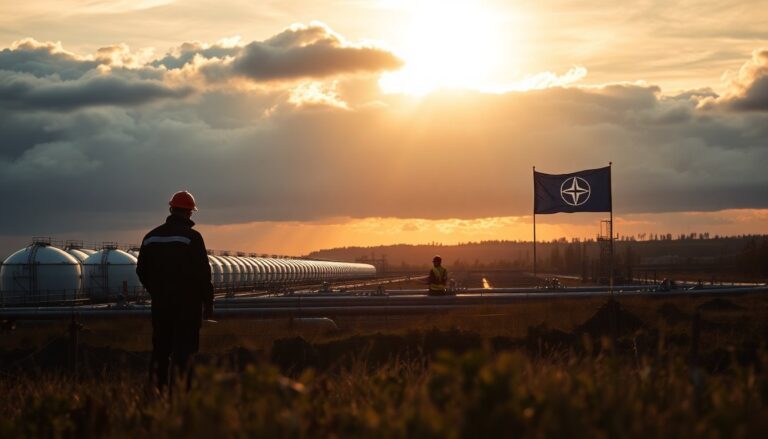
Former President Donald Trump has stated that the ongoing Russia-Ukraine war could reach a decisive end if NATO countries stop purchasing oil from Russia. In a recent post on his social media platform, Trump criticized NATO’s commitment to the war effort, asserting it has been less than 100%.
He described the purchase of Russian oil by NATO members as “shocking,” claiming it undermines the alliance’s negotiating power with Russia.
Trump’s remarks come amid escalating tensions following incidents involving Russian drones entering Polish airspace, which Polish defense forces subsequently shot down.
This situation highlights the need for NATO members to reconsider their energy purchasing strategies. Trump noted that Turkey is the third-largest buyer of Russian oil, following China and India, and pointed out that NATO members Hungary and Slovakia are also purchasing Russian oil.
Proposal for Tariffs and Oil Ban
In his social media post, Trump urged NATO to impose a comprehensive ban on Russian oil imports and suggested tariffs on Chinese oil purchases ranging from 50% to 100%. He argued that these measures would significantly enhance NATO’s bargaining power and be crucial in ending what he called a “deadly, but ridiculous, war.” Trump contended that a strong stance against Russian oil would weaken Russia’s position and disrupt China’s influence over Russia.
Trump’s call to action also includes a demand for NATO countries to remove tariffs on China if the war concludes. “China has a strong control, and even grip, over Russia,” he stated, emphasizing that imposing powerful tariffs could effectively “break that grip.” This approach may reshape the geopolitical landscape, particularly regarding US-China relations amid the ongoing conflict.
The Blame Game
In his statements, Trump attributed the responsibility for the war to current President Joe Biden and Ukrainian President Volodymyr Zelensky, notably omitting any mention of Russian President Vladimir Putin, who initiated the invasion. His criticisms of the current administration’s handling of the conflict reflect the contentious political atmosphere surrounding US foreign policy.
The complexity of the geopolitical situation requires a careful examination of the economic ties between NATO countries and Russia. With the US Congress currently considering a bill to strengthen sanctions against Russia, Trump’s proposals for an oil embargo and tariffs could complicate ongoing discussions within the alliance.
Conclusion and Implications
As NATO members evaluate the implications of Trump’s proposals, the potential for a significant shift in their energy policies remains a focal point. The intersection of energy dependence and geopolitical strategy is increasingly critical in the context of the Russia-Ukraine conflict. Trump’s assertion that halting oil purchases could lead to a swift resolution to the war invites further scrutiny and debate among policymakers and analysts alike.
