

As tensions escalate, North Korea's Kim Yo Jong warns that joint military exercises by the US, Japan, and South Korea could have severe consequences. What does this mean for the region?
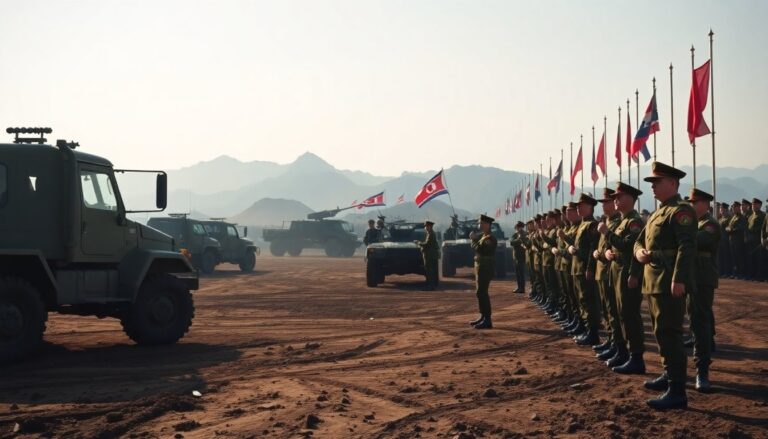
The recent military drills involving the United States, Japan, and South Korea have heightened tensions in the region. North Korea’s Kim Yo Jong has criticized these exercises, labeling them as “dangerous” and a “reckless show of strength.” This development raises important questions about the implications for regional security.
The Context of the Tensions
Kim Yo Jong, the sister of North Korean leader Kim Jong Un, plays a significant role in the country’s political landscape. Her remarks came just before the commencement of joint military exercises named “Freedom Edge,” which are set to take place near South Korea’s Jeju Island.
These drills, which combine naval, air, and missile defense maneuvers, will continue until Friday.
The presence of forces from three nations conducting operations near North Korea’s borders has drawn strong condemnation from Kim Yo Jong. She warned that such displays of military power could lead to “negative consequences” for the participants.
North Korea’s Perspective
North Korea perceives these military drills as more than mere preparations; they view them as potential pretexts for nuclear strikes. Analyst Hong Min from the Korea Institute for National Unification indicates that Pyongyang may use these allied exercises as justification to enhance its military capabilities. This could lead to advancements in nuclear modernization and the strengthening of conventional forces.
In addition to the trilateral drills, the US and South Korea are planning a tabletop exercise called “Iron Mace,” which will focus on integrating conventional and nuclear responses to North Korean threats. This is significant, particularly considering the presence of approximately 28,500 American troops stationed in South Korea.
The Broader Implications
The current situation extends beyond military exercises; it reflects a broader narrative of increasing tensions in the region. Following the unsuccessful summit with the US in 2019, North Korea has reiterated its commitment to its nuclear arsenal, declaring itself an “irreversible” nuclear state.
Furthermore, Kim Jong Un appears to be bolstered by international events, such as the conflict in Ukraine, as he forges closer ties with Russia. The two countries signed a mutual defense pact last year, raising concerns about the potential formation of a new alliance.
As the situation develops, reactions from both sides will be crucial. North Korea’s top party official Pak Jong Chon has warned that if the “hostile forces” continue to demonstrate their military strength, North Korea will respond “more clearly and strongly.” This raises critical questions about the potential for a new chapter in international relations and whether this is merely another instance of geopolitical posturing.
