

A shocking call for violence during a London protest has ignited widespread condemnation. What does this mean for the future of protests in the UK?
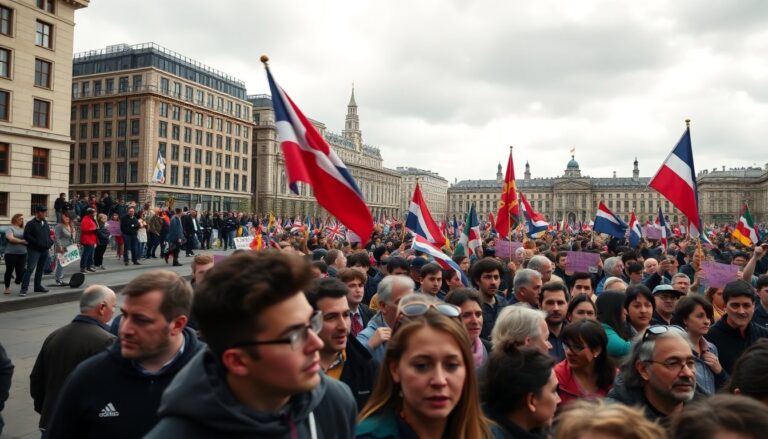
A significant incident occurred recently in London during a large anti-migrant march. Approximately 110,000 people attended the demonstration, which took a troubling turn when a protester made alarming remarks about Labour leader Sir Keir Starmer. The individual, a supporter of Tommy Robinson, was filmed suggesting that Starmer should be “assassinated.” This raises serious concerns about the current state of public discourse.
What happened at the march?
The atmosphere was tense at the ‘Unite The Kingdom’ march, organized by Tommy Robinson, whose real name is Stephen Yaxley-Lennon. During an interview with conspiracy theorist William Coleshill, a protester expressed a desire for violence against Starmer.
Coleshill, rather than denouncing the comment, suggested that Starmer should be tried and “lawfully executed.” This exchange has sparked widespread outrage on social media.
Footage of the incident has gone viral, leading to calls for immediate action against the individuals involved.
Many users on social media have expressed that there should be consequences for such remarks, indicating a growing concern about the implications of political violence.
The aftermath and public response
Following the march, which is considered one of the largest right-wing demonstrations in British history, the police reported nine arrests due to clashes between Robinson’s supporters and law enforcement. The Metropolitan Police noted they faced “unacceptable violence” while attempting to manage the crowd. This raises critical questions about the safety of public demonstrations and the responsibilities of those involved.
This incident coincides with the recent assassination of American right-wing activist Charlie Kirk during a university event in Utah, prompting discussions about the rising trend of violence associated with political protests. Observers are left wondering whether there is a deeper issue at play.
Counter-protests and the societal impact
Simultaneously, a counter-protest organized by Stand Up To Racism (SUTR) attracted around 5,000 participants opposing the messages promoted by Robinson’s supporters. The stark division in public opinion was evident, as police were forced to manage aggressive behavior from both sides, highlighting the heightened tensions in the current political climate.
As the day progressed, the situation intensified, with protesters pushing against police lines and further clashes occurring. Reinforcements were called in to maintain order, reflecting a society grappling with significant divisions. Addressing these divisions remains a challenge, and there are questions about the possibility of constructive dialogue.
In light of these events, it is crucial to consider the implications for society. The calls for violence at public protests are alarming and warrant serious attention. Engaging in discussions about how to address rising tensions and promote peaceful dialogue is essential for moving forward.
