

Curious about how the energy market is evolving to tackle grid constraints? Let's dive into the innovative Local Constraint Market and its implications!
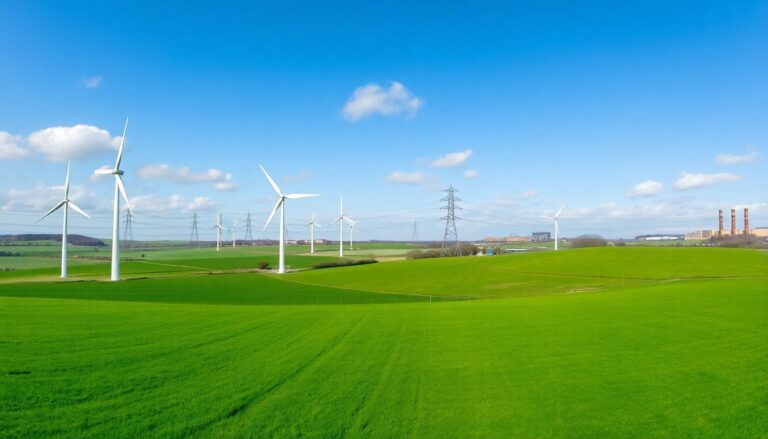
Local constraint markets have emerged as a significant development in the energy sector, particularly in the UK. These markets aim to address challenges related to electricity production and consumption.
Understanding Constraints in the Energy Grid
In the energy grid, constraints occur when the amount of electricity produced exceeds the network’s capacity to handle it.
This situation forces operators to request that electricity producers reduce their output, leading to inefficiencies.
In the UK, this issue has become increasingly prevalent, especially between Scotland and England. For the financial year 2022-2023, the National Energy System Operator (NESO) reported costs totaling USD 2.2 billion due to these constraints, highlighting the financial implications of managing electricity flow.
Introducing the Local Constraint Market
The Local Constraint Market (LCM) provides a new approach for electricity users and producers in specific areas to bid on adjusting their electricity usage. This mechanism allows various participants to contribute to balancing energy supply and demand effectively.
Unlike the traditional Balancing Mechanism (BM), which requires participants to adjust their output every half hour, the LCM offers greater flexibility. It allows flexibility providers, such as energy suppliers and aggregators, to participate in real-time adjustments, enhancing the market’s responsiveness.
Moreover, since the LCM operates on a day-ahead basis, actions taken today can help reduce costs and streamline the balancing process for the following day.
Real-World Applications and Pilot Initiatives
In 2024, NESO conducted a pilot initiative in Scotland where households adjusted their electricity usage to utilize excess wind power. Over ten days, they successfully contracted 3 megawatts of demand response, demonstrating effective energy management.
As NESO continues to develop the LCM into 2025, the focus remains on creating a more flexible and responsive energy market. However, while these markets show promise, challenges remain in fully addressing the energy landscape.
Notably, approximately 76% of constraint costs still go to fossil gas generators, which are compensated to increase output during times of constraint. This indicates that, despite progress with the LCM, fossil fuels continue to play a significant role in the energy sector.
