

Evhen Ihnatov recounts his traumatic journey through the Russian occupation of Kherson, highlighting the resilience of youth in the face of adversity.
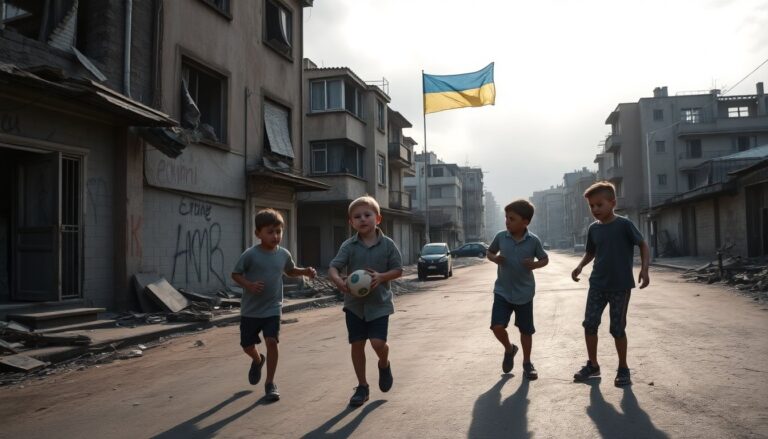
Evhen Ihnatov’s life took a dramatic turn when Russian forces occupied his hometown of Kherson in 2022. At just 13 years old, he faced unimaginable loss and hardship. His story is not just about survival but also about the enduring spirit of youth amid despair.
In a world where war seems to overshadow innocence, how does one navigate through such chaos? Let’s dive into Evhen’s experiences and the reality faced by many in occupied Ukraine.
The onset of tragedy
Imagine being a teenager and suddenly having your entire world flipped upside down.
Evhen’s mother, Tamara, lost her life when a minibus she boarded was tragically caught in the crossfire of a misdirected missile. On the same day, his brother was forcibly taken to Russia, leaving the young boy to grapple with a world filled with grief and confusion.
“We buried her in the countryside. Grandma was beside herself,” Evhen recalls, a poignant reminder of the personal toll of conflict.
As the occupation began, Kherson, the administrative heart of the region, became a place of fear and repression. Evhen describes how, from the very first days of occupation, the atmosphere was filled with dread. Reports of mistreatment, abduction, and even torture by occupying forces were rampant. “They beat people, a real lot,” he shares, highlighting the brutal reality many faced. It’s almost unfathomable to think about how a young person processes such trauma.
Despite the overwhelming darkness, Evhen’s resilience shines through. Now 16 and living in Mykolaiv, he’s pursuing his dream of becoming a car mechanic while holding down a part-time job. But his dreams were once eclipsed by the shadows of the occupation, filled with anxiety and a newfound sense of dark humor. Who else can relate to finding light in such dark times?
Resistance and adaptation
Life under occupation is a delicate balance between survival and resistance. Evhen recalls the protests that erupted in Kherson as locals attempted to reclaim their agency. “Rallies stopped because of the crackdown, but most of the locals remained pro-Ukrainian,” he notes. This sense of community, even in the face of oppression, speaks volumes about the human spirit.
However, the Russian authorities implemented a strict regime to control the population, including educational policies that sought to erase Ukrainian identity. Schools became battlegrounds of ideology, with new curriculums glorifying Russia while diminishing the Ukrainian narrative. “They explained everything, every little thing,” Evhen remembers, highlighting the condescending approach of the new teachers who assumed students knew nothing.
This is giving me serious vibes of cultural erasure. The students quickly learned to communicate cautiously, avoiding sensitive topics for fear of being overheard. “Everything was happening outside the school,” Evhen said, encapsulating the pervasive tension of life during occupation. It’s a stark reminder of how conflict can seep into every aspect of life, forcing young people to adapt in ways they never imagined.
Hope amid chaos
Yet, amid the chaos, there are glimmers of hope. Evhen’s family, despite the challenges, found ways to support each other, moving to their grandmother’s house outside of the heavily patrolled city. They had to make tough choices, but their bond kept them grounded. “We got good grades for nothing,” Evhen reflects on the absurdity of the educational system imposed upon them. It’s a testament to their resilience that they found ways to push back against a system that tried to define them.
As Russian forces withdrew from Kherson in late 2022, Evhen experienced a bittersweet victory. “The liberation was about nothing but joy, freedom and joy,” he recalls, but the reality soon shifted as the left bank faced relentless shelling. This plot twist in his journey reminds us that the effects of war linger long after physical battles have ended.
Evhen’s story is a powerful reminder of the strength and resilience of young people in the face of adversity. His experiences reflect the broader struggles of a generation caught in the crossfire of conflict. What can we learn from stories like his? How do we continue to support those affected by war and ensure their voices are heard?
Imagine being a teenager and suddenly having your entire world flipped upside down. Evhen’s mother, Tamara, lost her life when a minibus she boarded was tragically caught in the crossfire of a misdirected missile. On the same day, his brother was forcibly taken to Russia, leaving the young boy to grapple with a world filled with grief and confusion. “We buried her in the countryside. Grandma was beside herself,” Evhen recalls, a poignant reminder of the personal toll of conflict.0
