

The Vuelta a España faced unexpected turmoil as protests erupted, highlighting the clash between sports and social movements.
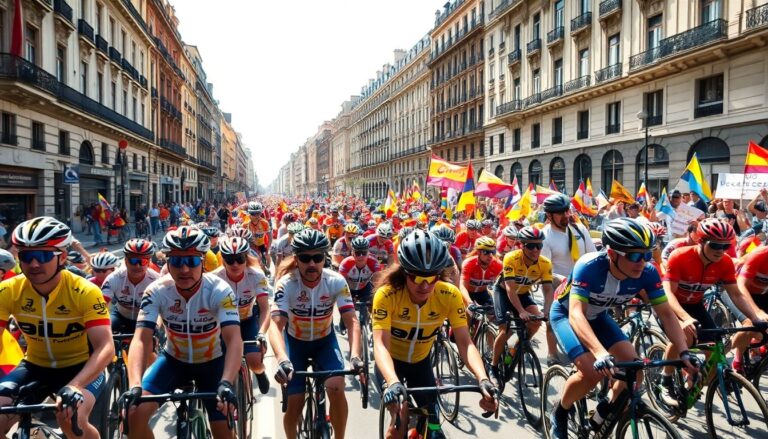
This week, the Vuelta a España experienced an unexpected disruption as pro-Palestinian demonstrators halted the cycling finale in Madrid. The intersection of sports and real-world issues became apparent during this significant event.
The Day of the Race: A Dramatic Turn of Events
What was anticipated to be a celebratory day for cyclists, including Danish star Jonas Vingegaard, transformed dramatically as approximately 100,000 protesters took to the streets. While police attempted to manage the situation with over 1,000 officers present, cyclists faced an unprecedented interruption.
As the race continued, demonstrators breached metal barriers, stepping onto the course. The event was ultimately declared abandoned, with organizers announcing, “The race is over.” This disruption highlights the growing trend of activism within the realm of sports.
The protests were not isolated incidents.
Pro-Palestinian demonstrations have consistently targeted the Israel-Premier Tech cycling team, owned by Israeli-Canadian developer Sylvan Adams. The ongoing conflict in Gaza has intensified public scrutiny of the team, underscoring the interconnection between sports and social activism.
Community Response and Political Backdrop
The broader political context cannot be overlooked. The Spanish government has expressed solidarity with the Palestinian cause, taking significant diplomatic actions such as recalling its ambassador from Tel Aviv and denying entry to two Israeli ministers. Recently, Spain also officially recognized a Palestinian state, marking a noteworthy shift in political stance.
Furthermore, Sports Minister Pilar Alegria has suggested banning Israeli teams from international competitions, drawing parallels to restrictions on Russian teams following the Ukraine invasion. This position may be controversial, but it has sparked a vital discussion regarding fairness and representation in sports.
Freelance journalist Lily Mayers captured the essence of the protests, noting the powerful imagery of thousands marching with flags and banners amid clashes with police. This serves as a crucial reminder that sports are deeply intertwined with societal issues and the passions that motivate individuals.
Looking Ahead: The Future of Sports Amidst Activism
As we reflect on these events, the pressing question remains: what implications will this have for future sporting events? Athletes are increasingly leveraging their platforms to address social issues, indicating a significant shift where the boundaries between sports and activism are becoming less distinct.
Israeli Prime Minister Benjamin Netanyahu praised the Israel-Premier Tech team for their resilience in the face of protests, while Spanish Prime Minister Pedro Sanchez commended the demonstrators. This complex interplay of support and opposition is noteworthy as it unfolds.
Looking to the future, will we witness more athletes advocating for causes they believe in? The current landscape suggests a burgeoning movement within sports that warrants ongoing dialogue—one that recognizes not only the athletes but also the causes they champion and the communities they affect.
What was anticipated to be a celebratory day for cyclists, including Danish star Jonas Vingegaard, transformed dramatically as approximately 100,000 protesters took to the streets. While police attempted to manage the situation with over 1,000 officers present, cyclists faced an unprecedented interruption.0
