

**Analyze the Impact of Oxford Street's Transition to Mayoral Control and Public Perspectives on Pedestrianization Initiatives** - Investigate the consequences of Oxford Street's shift to mayoral governance, focusing on its implications for urban development and transportation policy. - Examine the range of public opinions and stakeholder perspectives regarding the pedestrianization project, highlighting both support and opposition. - Assess the potential benefits of pedestrianization, including enhanced public safety, improved air quality, and increased foot traffic for local businesses. - Explore the challenges and criticisms associated with the project, addressing concerns such as accessibility, traffic displacement, and economic impact on surrounding areas. - Provide data-driven insights and recommendations for future urban planning initiatives, ensuring a balanced approach that considers the needs of all stakeholders involved.
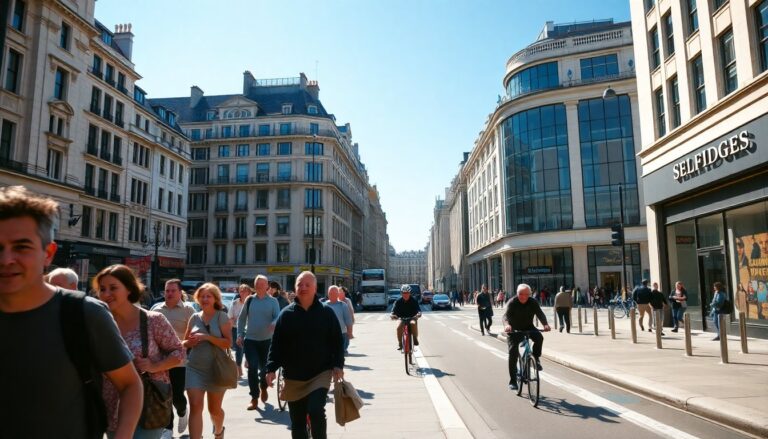
In a significant development for London’s retail sector, Oxford Street is set to undergo a transformation as control shifts from the local council to the office of Mayor Sadiq Khan. This decision, finalized by the Labour-led Westminster council, will take effect on September 20, initiating a new era for one of the UK’s most renowned shopping avenues.
The transition aims to enhance pedestrian access, with plans for partial pedestrianization between Selfridges and Ikea projected for 2027 or 2028. While many view this as an effort to improve the public realm, it has sparked considerable debate.
The Shift of Responsibilities
As part of this transfer, Transport for London (TfL) will oversee the entire stretch of Oxford Street, from Marble Arch to Tottenham Court Road. Responsibilities will include repairing potholes, clearing drains, and maintaining traffic signals and bus stops. TfL will also manage several adjacent roads, including parts of Regent Street and New Bond Street.
Community Response to the Changes
A recent consultation by TfL indicated that nearly 70% of respondents supported the proposed changes. Advocates assert that these initiatives will create a safer, more inviting environment, promoting a vibrant atmosphere for both locals and tourists.
Conversely, the Conservative faction within Westminster council has strongly opposed the changes. Councillor Paul Fisher expressed intent to challenge the mayor’s plans, criticizing the reclassification of the responsibility transfer as a non-key decision, which limits thorough scrutiny and debate.
Criticism from Local Politicians
Councillor Tim Barnes has been a vocal critic, labeling the mayor’s vision of pedestrianizing the area as contradictory to Oxford Street’s primary role as a thoroughfare. He described the proposal as a flawed initiative that would obstruct traffic flow rather than enhance it.
Barnes’s remarks reflect broader concerns among local businesses and residents, who worry that the plans may disrupt traditional commerce and accessibility. He suggested that the mayor’s intentions prioritize personal ambitions over the community’s needs and those of local enterprises.
Financial Implications of the Handover
The financial ramifications of this handover remain largely unclear. While Westminster council will continue to manage street cleaning and refuse collection, the overall effects of TfL’s governance have yet to be fully evaluated. The Greater London Authority (GLA) has stated that the costs related to the oversight of Oxford Street are currently unquantifiable.
Despite mixed reactions, Mayor Khan has framed the transfer as a crucial step toward realizing his vision for a more accessible and environmentally friendly Oxford Street. He underscored the importance of transforming this iconic destination into a world-class space that caters to all.
Future Developments and Plans
Looking ahead, the mayor plans to establish a mayoral development corporation for Oxford Street by January 2026, which would grant him expanded planning and financial authority. This initiative aims to accelerate the pedestrianization process and ensure a comprehensive approach to the area’s redevelopment.
The transition aims to enhance pedestrian access, with plans for partial pedestrianization between Selfridges and Ikea projected for 2027 or 2028. While many view this as an effort to improve the public realm, it has sparked considerable debate.0
The transition aims to enhance pedestrian access, with plans for partial pedestrianization between Selfridges and Ikea projected for 2027 or 2028. While many view this as an effort to improve the public realm, it has sparked considerable debate.1
