

Explore the challenges and realities of implementing regenerative agricultural practices on operational farms.
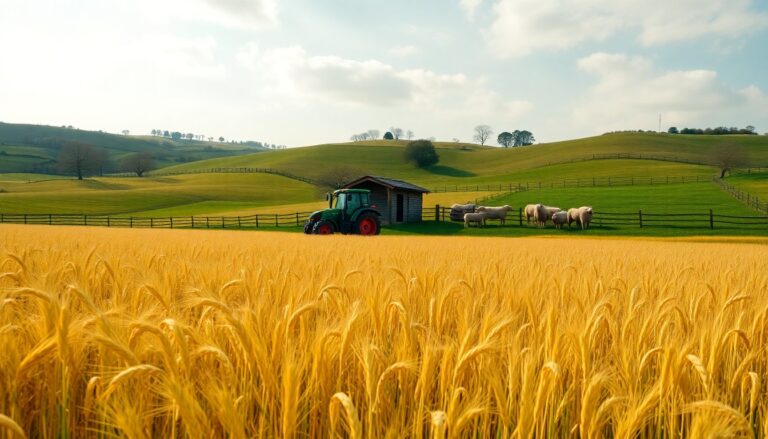
Adam Henson Discusses Challenges in Regenerative Farming
On a sprawling estate in the Cotswolds, Adam Henson, a prominent figure in the farming community, has opened up about the hurdles he faces in his pursuit of regenerative farming. During a recent podcast focused on sustainable agricultural practices, he candidly acknowledged that financial constraints have significantly complicated his journey.
Henson operates the 650-hectare Cotswolds Farm Park with his wife, Charlie. He is a staunch advocate for regenerative agriculture, an approach that seeks to revitalize land and enhance its natural ecosystem. However, despite his enthusiasm, Henson has encountered notable challenges, particularly with specific crops.
Challenges on the Farm
In his conversation, Adam highlighted the difficulties he and his team have experienced while farming beans, peas, and oilseed rape. He stated, “We have been navigating how to enhance our soil health, manage our carbon emissions, and protect the environment for several years now, especially with our grey crops.
Unfortunately, beans have not proven to be profitable, peas are nearly impossible to cultivate, and oilseed rape has faced severe pest issues from flea beetles.”
These challenges have prompted the decision to convert some of the less productive land into wildflower and seed margins. Henson described this transformative step as a necessary brake block in their farming strategy, emphasizing its significance for their regenerative goals.
Financial Implications
The journey toward sustainability has not been without costs. Henson noted that without certain financial aids, pursuing this path would have been exceedingly difficult. He recounted previous conversations with neighboring regenerative farmers, such as David Wilson, which highlighted alternatives to traditional farming methods while underscoring how financial burdens hindered their progress.
“The funding we received to implement these changes has been invaluable, enabling us to expedite our regenerative practices,” he remarked. Henson is particularly focused on exploring methods that could lead to a more sustainable farming future, demonstrating his commitment to both the land and the agricultural community.
Engagement with Regenerative Practices
This is not the first time Adam has publicly addressed the concept of regenerative agriculture. In a Countryfile episode aired in 2022, he and a neighbor discussed potential adjustments to their farming practices while balancing economic viability with environmental responsibility. Henson revealed that he was using over 200 tonnes of nitrogen fertilizer for crop production, contrasting sharply with David’s organic and regenerative approach, which utilized no synthetic additives.
Intrigued by this different farming philosophy, Adam expressed curiosity about how these methods could be adapted to his farm’s unique conditions. His neighbor, David, emphasized the importance of minimizing soil disturbance and cultivating a diverse array of plants as core principles of regenerative agriculture. He also advised Henson to significantly reduce chemical inputs, which are not only costly but also detrimental to the environment.
The Road Ahead
Despite the challenges, Adam remains optimistic about the future of his farming practices. He understands that embracing a regenerative approach does not require complete organic certification but can be a gradual transition. The experiences he has gained through discussions with regenerative farmers and his own trials in the field will undoubtedly shape his journey moving forward.
Viewers can follow Adam’s journey and insights into regenerative farming by tuning into Countryfile on BBC One, where he continues to explore sustainable practices and their implications for modern agriculture. His narrative serves as a reminder of the complexities and rewards that accompany the pursuit of more sustainable farming practices.
