

**Analysis of NATO's Quick Reaction Force Engagement with Russian Aircraft in Baltic Airspace** **Overview** This report delves into the strategic implications of NATO's quick reaction force (QRF) interacting with Russian aircraft within the Baltic airspace. It examines the operational readiness, geopolitical tensions, and potential consequences of such engagements in the context of international security. **Key Points** 1. **Operational Readiness of NATO's Quick Reaction Force** - Assessment of NATO's QRF capabilities and response protocols. - Historical context of NATO's air policing missions in the Baltic region. 2. **Geopolitical Tensions in the Baltic Region** - Analysis of NATO-Russia relations and the impact of military maneuvers. - Examination of Baltic states' security concerns and defense strategies. 3. **Potential Consequences of Engagements** - Discussion on the risks of miscommunication and escalation during encounters. - Evaluation of the implications for NATO's collective defense strategy and deterrence posture. **Conclusion** Understanding the dynamics of NATO's quick reaction force engagement with Russian aircraft in Baltic airspace is crucial for anticipating shifts in the regional security landscape and formulating effective defense policies.
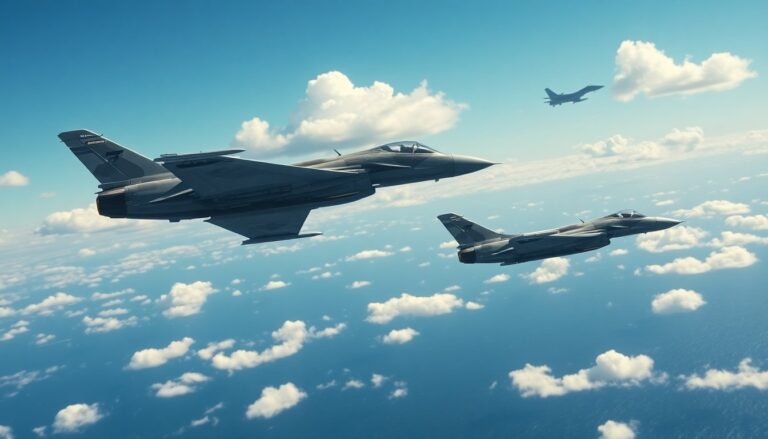
The German air force has reported a significant incident involving the interception of a Russian aircraft that entered neutral airspace over the Baltic Sea. This action was prompted by a directive from NATO, highlighting the ongoing geopolitical tensions in the region.
On a recent Sunday, two Eurofighter jets were deployed as part of NATO’s quick reaction alert force to address an unidentified aircraft flying without a flight plan and lacking radio communication. This proactive measure reflects NATO’s commitment to maintaining airspace integrity against potential threats.
Details of the interception operation
The operation confirmed that the aircraft in question was a Russian IL-20M reconnaissance plane. After visually identifying the aircraft, the German jets transitioned escort duties to their Swedish NATO allies and returned to their base at Rostock-Laage.
This incident occurred as NATO prepared for a meeting of the North Atlantic Council, scheduled for Tuesday, to deliberate on another alarming event involving Russian military jets over Estonia. Such incidents underline the increasing frequency of airspace violations near NATO’s eastern borders.
Escalating tensions in the region
Estonia reported a significant breach of its airspace last Friday, describing it as an “unprecedented and brazen” violation. Three Russian MiG-31 fighters allegedly entered Estonian airspace without permission and remained for approximately 12 minutes. This situation has drawn condemnation from both NATO and various European governments, who labeled the incursion as a reckless provocation.
In response, Estonian Prime Minister Kristen Michal called for urgent discussions under NATO Article 4, which allows member states to consult on security threats that could affect their territorial integrity or political independence. This request underscores the seriousness with which Estonia views the situation.
Responses and implications
While Estonia has summoned the Russian charge d’affaires in protest, the Russian Ministry of Defence has dismissed the allegations against its military. The current climate of tension has led to a series of airspace violations, with recent incidents including Romania’s detection of a Russian drone, prompting the scrambling of fighter jets.
Moreover, Poland reported shooting down several drones linked to a Russian attack on Ukraine earlier this month. These military maneuvers are perceived by analysts as attempts by Moscow to challenge NATO’s resolve, particularly as the conflict in Ukraine continues into its fourth year.
Intelligence and pressure tactics
Military experts suggest that such incursions serve multiple purposes: they act as intelligence-gathering operations, test the responses of NATO forces, and exert psychological pressure on member states bordering Russia. This multifaceted strategy aims to unsettle NATO while assessing its readiness and commitment to collective defense.
As NATO faces these challenges, the alliance’s coordinated responses and strategies will be crucial in ensuring airspace security and maintaining regional stability. The recent activities indicate a need for heightened vigilance and readiness among NATO members as they navigate this complex geopolitical landscape.
