

**Charlie Kirk: A Legacy in Conservatism** Explore the significant influence Charlie Kirk has had on the conservative movement and the ongoing efforts to honor his lasting legacy.
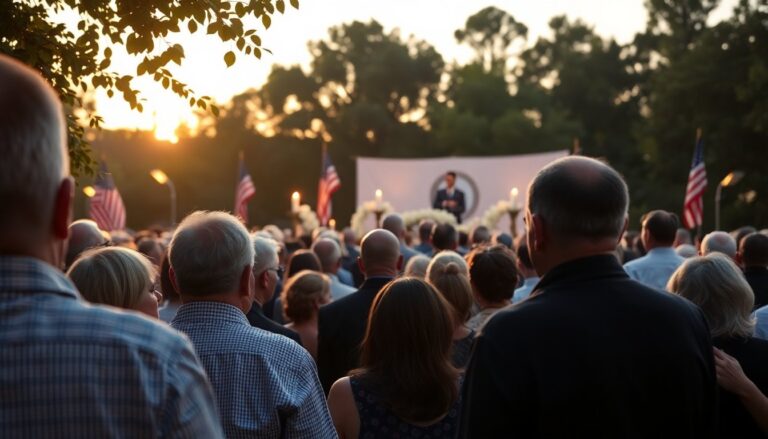
On a solemn evening, conservatives gathered to pay tribute to Charlie Kirk, a significant figure in American politics, who tragically lost his life. The memorial service, attended by thousands, celebrated Kirk’s dedication to conservative ideals and his unwavering belief in the future of the nation.
Among the attendees was former President Donald Trump, who referred to Kirk as a “great American hero” and a martyr for the cause of freedom. This gathering, marked by emotional speeches and a deep sense of loss, underscored the ongoing commitment to carry forward Kirk’s work in shaping American politics.
The Significance of Charlie Kirk’s Mission
Charlie Kirk was known for his passionate advocacy of conservative values, particularly among young Americans. His organization, Turning Point USA, aimed to mobilize youth to embrace the principles of limited government, free markets, and individual responsibility.
This tragic event has sparked a renewed sense of purpose among his followers, who vow to continue his mission.
Calls to Action from Influential Leaders
During the memorial, speakers emphasized the importance of family values and the need for young conservatives to marry and raise families as a way to perpetuate their beliefs. JD Vance, Vice President, articulated this sentiment, asserting that standing up for truth and defending the nation is paramount. His reminder to the audience was clear: they must strive to push politics further to the right in honor of Kirk’s legacy.
Conservative Responses to Tragedy
The assassination of Kirk on a college campus in Utah ignited intense discussions about violence and free speech in today’s politically charged atmosphere. Many conservatives expressed concerns that outrage surrounding his death is being exploited to justify silencing dissenting voices. Kirk’s death has transformed into a pivotal moment for the conservative movement, evoking fears of potential repercussions for those who openly criticize the administration.
Community and Faith at the Forefront
The atmosphere at the memorial service resembled that of a large church gathering, with attendees singing hymns and engaging in fervent prayer. Reverend Rob McCoy, Kirk’s pastor, articulated how Kirk viewed politics as a pathway to faith in Jesus, highlighting the spiritual dimensions of his mission. The event illustrated the profound connection between Kirk’s political activism and his deep religious convictions.
Challenges to Kirk’s Legacy
As the memorial unfolded, it became evident that Kirk’s controversial statements on various issues had drawn both admiration and criticism. Some attendees defended Kirk against accusations of racism or intolerance, arguing that his legacy should not be diminished by selective interpretations of his words. The debate surrounding his life and work only intensifies following his tragic death.
The individual accused of Kirk’s murder, Tyler Robinson, has been charged and faces severe penalties if convicted. Authorities remain tight-lipped regarding the motive behind this act of violence, yet Robinson’s own words suggest a deep-seated animosity towards Kirk’s views. This tragedy serves as a stark reminder of the polarized climate in which political figures operate.
The Future of Conservatism in Kirk’s Absence
While Charlie Kirk may no longer be physically present, his influence continues to resonate within the conservative movement. His organization, Turning Point USA, remains committed to empowering young conservatives, ensuring that his vision endures. During the memorial, the call to action was clear: to honor Kirk, activists must double down on their efforts to advance a right-leaning agenda.
As the community reflects on Kirk’s contributions, it becomes essential to recognize the challenges ahead. His legacy will be shaped not only by his supporters but also by the broader political landscape. The conversation surrounding his life and the ideals he championed will undoubtedly persist as conservatives navigate the complexities of modern politics.
