

Explore the captivating evolution of sports, tracing their origins to the grand spectacles of today’s mega-events.
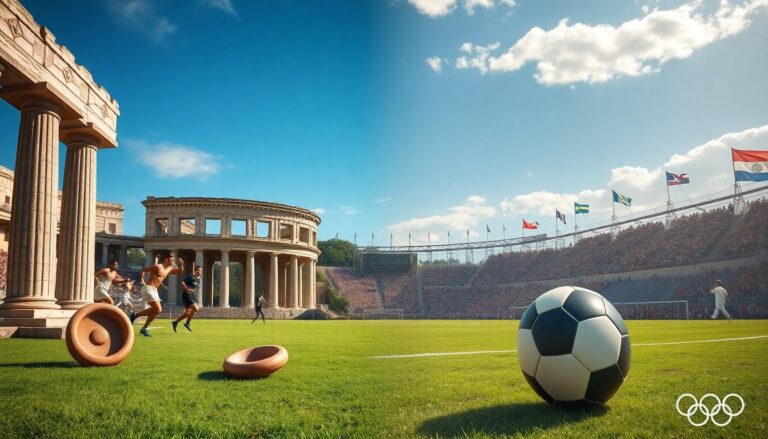
The Evolution of Sports: A Reflection of Society
Sports have been a vital part of human culture for thousands of years. They serve not only as entertainment but also as a way to build community and foster competition. From the ancient Olympic Games in Greece to the global excitement of the World Cup, the history of sports mirrors our societal evolution.
This article explores how sports have transformed, adapting to cultural shifts and technological advancements.
The earliest evidence of sports dates back to ancient civilizations, where physical contests often intertwined with religious rituals. These early games laid the groundwork for the organized sports we know today.
Over the centuries, sports have undergone significant changes, influenced by politics, culture, and technology. This evolution underscores not only the adaptability of sports but also their essential role in shaping societal values.
The Origins of Sports: Ancient Civilizations
The concept of sport dates back to ancient civilizations, including the Egyptians, Chinese, and Greeks.
A defining moment in sports history is the ancient Olympics, which began in 776 BC. This event celebrated athletic prowess while honoring the gods. Athletes competed in various events such as running, wrestling, and chariot racing, demonstrating their physical strength and skill.
In ancient Rome, sports evolved into different forms, focusing on gladiatorial contests and public spectacles held in grand arenas. These events went beyond mere competition; they served as a means of social control and entertainment for the masses. The emphasis shifted from athleticism to spectacle, fundamentally altering the perception and organization of sports during that period.
The Intersection of Culture and Politics in Sports
The development of sports has been significantly shaped by cultural and political circumstances. For example, during the Middle Ages, activities such as jousting and archery served not only as entertainment but were crucial for training knights for warfare. With the advent of the Renaissance, there was a renewed focus on humanism and the physical form, leading to the creation of more structured sports.
The 19th century saw the Industrial Revolution play a vital role in the commercialization and globalization of sports. The formation of sports clubs and associations created opportunities for formal competition. The revival of the modern Olympic Games in 1896 by Pierre de Coubertin marked a significant turning point in sports history, fostering international competition and a spirit of camaraderie.
The Impact of Globalization on Modern Sports
In today’s world, sports are not just activities; they are a global phenomenon. Major events like the FIFA World Cup and the Summer Olympics draw millions of viewers from around the globe, proving the unifying power of sports. Have you ever thought about how these events bring people together, regardless of nationality? 🌍
Technology has played a significant role in this transformation. Innovations in broadcasting and digital media have made sports more accessible and engaging than ever. Fans can now watch their favorite teams and athletes from virtually anywhere. It’s amazing how a single game can connect audiences across continents, right?
However, the commercialization of sports has changed the landscape dramatically. Professional leagues and franchises have emerged, turning athletes into global icons. This shift raises important questions about ethics, health, and the integrity of the games we love. What do you think about the impact of money on sports? Is it enhancing or tainting the experience? 🤔
The Future of Sports
As we gaze into the future, the sports landscape is undergoing significant transformation. The rise of virtual reality and eSports is creating new competitive formats that captivate younger audiences, redefining what we consider a sport. Moreover, the integration of cutting-edge technologies in training and performance monitoring is fundamentally changing how athletes prepare for competition.
In addition, growing awareness of social issues within the sporting community is fueling movements that advocate for inclusivity and diversity. Today, athletes leverage their platforms to address crucial societal matters, ultimately reshaping the cultural role of sports.
The Enduring Impact of Sports on Society
Sports have always been more than just games; they are a reflection of our culture and history. From the ancient rituals that marked early competitions to today’s high-stakes tournaments, sports have continually adapted and thrived. They have become essential to our global community.
As we push the boundaries of what sports can be, it’s crucial to acknowledge their role in building community and promoting health. Sports unite us, offering shared experiences and fostering connections among people from diverse backgrounds. Through innovation, we can redefine the meaning of sports and ensure they remain a vital part of our lives.
