

Alaa Abd El-Fattah's release after nearly 12 years of imprisonment highlights persistent human rights issues in Egypt.
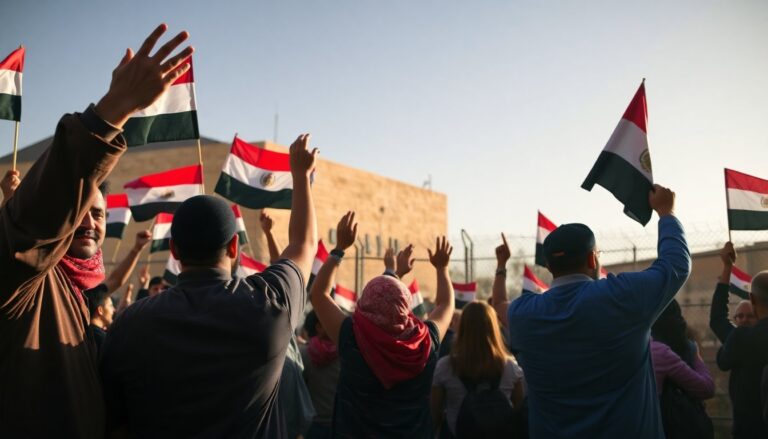
Alaa Abd El-Fattah, a prominent figure in Egypt’s pro-democracy movement, has recently regained his freedom following a presidential pardon granted on Monday. This decision, which has sparked various reactions, underscores the delicate nature of human rights in the nation.
According to his campaign, Abd El-Fattah was released from Wadi Natron Prison early Tuesday, marking a significant moment after almost 12 years of imprisonment. His release is part of a broader initiative where six other prisoners also received pardons, following appeals made by the National Council for Human Rights advocating for these individuals on humanitarian and health grounds.
The Background of Abd El-Fattah’s Activism
Abd El-Fattah’s journey as an activist took a pivotal turn during the 2011 Arab Spring, where he emerged as a leading voice advocating for democratic reforms in Egypt. Despite being arrested in 2014 for participating in an unauthorized protest and allegedly assaulting a police officer, his detainment has come to symbolize the declining state of democracy in the country.
In 2019, he faced a brief period of freedom before being re-arrested later that year amid a nationwide crackdown on dissent following rare anti-government demonstrations. His case has attracted international attention, prompting discussions about the treatment of political prisoners in Egypt.
A New Chapter in the Fight for Democracy
With his release, many are hopeful that this marks a new chapter not only for Abd El-Fattah but also for the broader struggle for human rights within Egypt. His supporters have long argued that his imprisonment was politically motivated, aimed at stifling dissent and silencing voices that challenge the government.
The recent pardon signals a potential shift in the political landscape, although it remains uncertain whether this will lead to a more open environment for activists and dissenters in Egypt. Observers are keenly watching how the government will respond to ongoing calls for reform and accountability.
Legal Proceedings and Allegations Against Kebatu
In a separate but equally concerning case, Ethiopian national Hadush Gerberslasie Kebatu is expected to face imprisonment following his conviction for multiple sexual offenses against two teenagers and a woman. Kebatu arrived in the UK shortly before these incidents, highlighting serious issues regarding asylum seekers and public safety.
After a three-day trial at Chelmsford and Colchester magistrates’ courts, the 38-year-old was found guilty of five charges, including sexual assault and attempted sexual assault. Testimonies revealed disturbing behaviors, such as making inappropriate advances towards minors and attempting to kiss a woman.
Community Reactions and Implications
The actions of Kebatu have sparked public outrage, leading to protests in Epping, Essex. Demonstrators have expressed their concerns about the safety of women and children in areas housing asylum seekers, further complicating the narrative surrounding immigration and community relations in the UK.
District Judge Christopher Williams, upon delivering the verdict, indicated that Kebatu should prepare for an immediate custodial sentence at his upcoming hearing. This case adds to the ongoing debate about the implications of asylum policies and how they intersect with local safety concerns.
Conclusion: Reflecting on Human Rights and Community Safety
According to his campaign, Abd El-Fattah was released from Wadi Natron Prison early Tuesday, marking a significant moment after almost 12 years of imprisonment. His release is part of a broader initiative where six other prisoners also received pardons, following appeals made by the National Council for Human Rights advocating for these individuals on humanitarian and health grounds.0
According to his campaign, Abd El-Fattah was released from Wadi Natron Prison early Tuesday, marking a significant moment after almost 12 years of imprisonment. His release is part of a broader initiative where six other prisoners also received pardons, following appeals made by the National Council for Human Rights advocating for these individuals on humanitarian and health grounds.1
