

**Title: The Impact of Personal Expression on School Policies: A Case Study of Hair Color Exclusion** **Summary:** This case study explores the implications of a student's vibrant hair color leading to exclusion from school, sparking a significant debate about personal expression versus institutional regulations. **Introduction:** In recent events, a student's choice to express individuality through vibrant hair color resulted in disciplinary action from the school administration. This incident highlights the ongoing tension between personal expression and school policies, prompting discussions around inclusivity, diversity, and the need for updated regulations in educational institutions. **Background:** - Overview of the student's decision to color their hair. - The school's dress code policies and their historical context. - Previous incidents of personal expression challenges within educational settings. **Discussion Points:** 1. **Personal Expression in Education:** - The role of self-expression in fostering creativity and individuality among students. - Psychological benefits of allowing students to express themselves. 2. **School Regulations and Inclusivity:** - Examination of existing school policies regarding personal appearance. - The importance of inclusivity in educational environments. 3. **Community and Parental Reactions:** - Analysis of community support or opposition regarding the student’s expression. - Perspectives from parents, educators, and students. 4. **Potential Policy Revisions:** - Proposals for updating dress codes to better reflect modern values of diversity and self-expression. - Recommendations for schools to create a more inclusive environment. **Conclusion:** The exclusion of a student due to their hair color serves as a catalyst for important discussions regarding personal expression and the need for progressive school policies. As educational institutions strive to foster an environment of acceptance and creativity, revisiting and revising outdated regulations will be crucial in supporting the diverse identities of all students. **Call to Action:** Encourage stakeholders, including students, parents, and educators, to engage in dialogue about the importance of personal expression in schools and advocate for policy changes that promote inclusivity and respect for individuality.
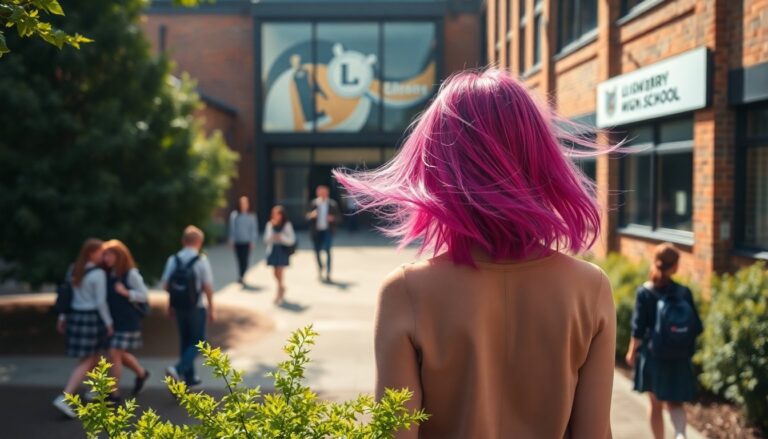
UPDATE AT 10:00 AM – A recent incident at Lliswerry High School in Newport has sparked a heated debate regarding student expression and school regulations. Thirteen-year-old Calliah Beaumont faced exclusion from her classroom after arriving with her hair dyed in vibrant shades of pink and purple.
This choice, intended as a form of self-expression, conflicted with the school’s uniform policy, which restricts hair colors to those deemed ‘natural.’
Our reporters on scene confirm that Calliah was promptly removed from her peers and placed in an isolated room, where she was instructed to revert her hair to its original color.
Lydia Beaumont, Calliah’s mother, expressed her frustration over the incident, emphasizing the emotional toll it has taken on her daughter.
Understanding School Policies and Their Impact
Concerns Over School Appearance Policies
School policies regarding appearance aim to foster a specific environment and uphold discipline.
However, such regulations can lead to unforeseen issues. In the case of Calliah Beaumont, the school’s strict adherence to its rules has raised concerns about fairness and the broader implications of these stringent guidelines.
The Case of Calliah Beaumont
Calliah, a committed student recognized for her exemplary conduct, expressed surprise when she faced consequences for her hair color. Her mother, Lydia, highlighted Calliah’s consistent demonstration of respect and responsibility within the school setting. “She is not one to push boundaries,” Lydia stated. “For her to be treated this way over her hair color feels unjust.”
Calliah’s dedication to her education is evident. She consistently arrives at school early and engages in various extracurricular activities. However, her decision to express herself through her hairstyle has resulted in social isolation. This situation highlights concerns regarding the impact of such policies on students’ mental health.
Broader Implications of Appearance Policies
The discussion surrounding strict uniform regulations in schools has gained momentum. Proponents argue that these policies foster discipline and prioritize academics. Conversely, critics contend that such restrictions can suppress individuality and self-expression, especially during the pivotal teenage years.
School Policy on Hair Color Sparks Controversy
Lliswerry High School’s administration has defended its hair color policy, stating that it aims to create a consistent and positive learning environment. They emphasized that hair must be a natural color to comply with these regulations, which are clearly communicated to all parents and guardians. Yet, this raises an important question: what impact do these policies have on a student’s sense of identity?
Future Steps for Calliah and Her Family
Lydia Beaumont has opted to keep her daughter Calliah at home until an agreement is reached with school officials. She plans to meet with senior staff to address her daughter’s situation and advocate for a reevaluation of the hair color policy. Lydia remains hopeful that the school will focus on more pressing educational issues rather than a student’s choice of hair color. She stated, “We should be addressing more pressing matters in education.”
The recent incident involving Calliah Beaumont’s hair color has sparked a crucial conversation about school policies on appearance and student individuality. As societal norms evolve, discussions surrounding self-expression and acceptance are becoming more significant. The challenge remains in balancing school standards with the need for students to showcase their unique identities.
Conclusion: Is Change Necessary?
The debate surrounding Beaumont’s hair color incident underscores a pressing issue within the educational system. While schools aim to maintain discipline, they must also acknowledge the value of individual expression. This situation could act as a turning point, encouraging educational institutions to reevaluate their policies in order to better reflect modern values of inclusivity and self-expression.
As Lliswerry High School navigates this situation, the future remains uncertain. Will the school uphold its strict regulations, or will it shift towards a more inclusive atmosphere for students like Calliah? Only time will reveal their direction. However, the dialogue surrounding education, discipline, and personal expression is just beginning.
