

Explore Birmingham: A City Rich in History and Culture Awaiting Your Discovery.
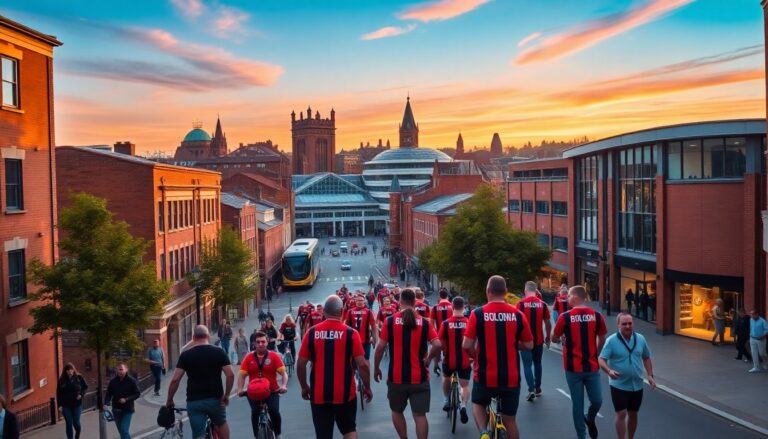
As Bologna prepares for its Europa League encounter against Aston Villa, it’s the perfect opportunity to delve into the vibrant city of Birmingham. This guide serves as a resource for fans traveling to the match and as a virtual tour for those wishing to experience the city from afar.
Birmingham, located in the heart of the Midlands, is the second-largest city in England, trailing only behind London. Its first recorded mention can be traced back to the Domesday Book of 1086, where it began its journey as a modest Anglo-Saxon agricultural settlement.
The city’s strategic location and access to vital resources such as iron and coal propelled it into the spotlight during the 16th century, marking the beginning of its industrial prominence.
A Historical Perspective on Birmingham
During the English Civil War, Birmingham emerged as a significant arms manufacturing hub, a legacy that continues to resonate in the modern-day Gun Quarter.
However, it was during the Industrial Revolution that the city truly flourished. The extensive development of canal networks and the advent of railways sparked an unprecedented demographic and economic boom.
Despite facing severe destruction during the Second World War, Birmingham underwent a remarkable transformation through extensive rebuilding efforts. Urban regeneration projects, such as the iconic Bullring, have shaped its modern identity, turning it into a bustling metropolis that attracts visitors from around the globe.
Key Attractions in Birmingham
At the heart of Birmingham lies Victoria Square, a central hub dedicated to Queen Victoria. This grand square is surrounded by neoclassical buildings, with the famous fountain known as The River taking center stage. Designed by the Indian sculptor Dhruva Mistry in 1993, this whimsical installation is affectionately nicknamed The Floozie in the Jacuzzi by locals.
Adjacent to the square, the Birmingham Town Hall stands proudly, inaugurated in 1834 to host the Birmingham Triennial Music Festival. This historical building now serves as a venue for various events, including jazz concerts and fashion shows. On the northern edge of the square, the impressive Council House looms, easily recognizable by its prominent clock tower, endearingly referred to as Big Brun by Birmingham residents.
Culture and Arts in the City
The Birmingham Museum and Art Gallery, established in 1885, is a treasure trove of culture. Featuring over 40 galleries, the museum showcases a diverse range of exhibits, from fine arts to social history and archaeology. Notably, its extensive collection of Pre-Raphaelite paintings includes more than 2,000 works, making it a must-visit for art enthusiasts.
In addition to its art collections, the museum houses artifacts from ancient civilizations, including pieces from Rome, Central Asia, and Ancient Egypt. Admission to the museum is complimentary, although some temporary exhibitions may require a fee, so checking the official Birmingham Museum and Art Gallery website for updates is advisable.
Modern Highlights of Birmingham
A short stroll from Victoria Square leads to the Birmingham Library, a testament to modern architecture designed by the Dutch firm Mecanoo Architecten. This impressive structure is the largest public library in Europe, boasting a collection exceeding one million books. Among its treasures is the second-largest collection of Shakespeare works globally, including a rare First Folio, one of only 250 copies that exist.
With nine levels to explore, the library features two rooftop gardens and connects seamlessly to the nearby Birmingham Repertory Theatre. For a panoramic view of the city, visitors can ascend to the library’s viewing gallery, offering breathtaking vistas of Birmingham.
Birmingham, located in the heart of the Midlands, is the second-largest city in England, trailing only behind London. Its first recorded mention can be traced back to the Domesday Book of 1086, where it began its journey as a modest Anglo-Saxon agricultural settlement. The city’s strategic location and access to vital resources such as iron and coal propelled it into the spotlight during the 16th century, marking the beginning of its industrial prominence.0
Historical Craftsmanship
Birmingham, located in the heart of the Midlands, is the second-largest city in England, trailing only behind London. Its first recorded mention can be traced back to the Domesday Book of 1086, where it began its journey as a modest Anglo-Saxon agricultural settlement. The city’s strategic location and access to vital resources such as iron and coal propelled it into the spotlight during the 16th century, marking the beginning of its industrial prominence.1
Birmingham, located in the heart of the Midlands, is the second-largest city in England, trailing only behind London. Its first recorded mention can be traced back to the Domesday Book of 1086, where it began its journey as a modest Anglo-Saxon agricultural settlement. The city’s strategic location and access to vital resources such as iron and coal propelled it into the spotlight during the 16th century, marking the beginning of its industrial prominence.2
Local Cuisine to Savor
Birmingham, located in the heart of the Midlands, is the second-largest city in England, trailing only behind London. Its first recorded mention can be traced back to the Domesday Book of 1086, where it began its journey as a modest Anglo-Saxon agricultural settlement. The city’s strategic location and access to vital resources such as iron and coal propelled it into the spotlight during the 16th century, marking the beginning of its industrial prominence.3
