

Explore England's rich history and its profound influence on contemporary society.
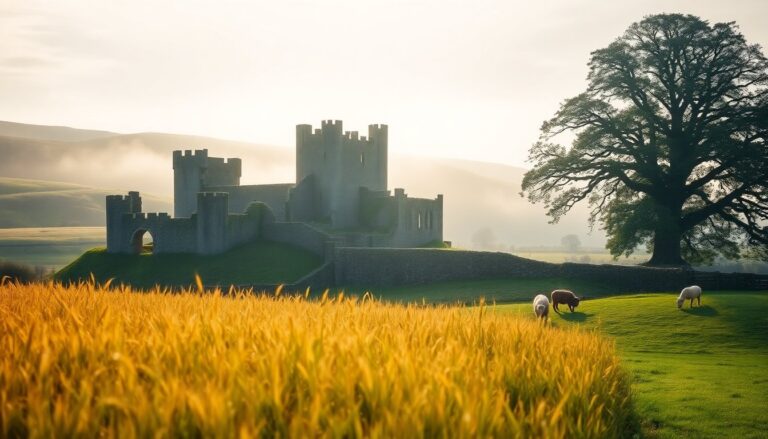
England, a country rich in history and cultural heritage, presents a complex tapestry woven from centuries of events and influences. Its evolution, from ancient roots to contemporary society, is marked by significant milestones that have shaped its identity and impacted the world.
This article explores England’s rich history and the cultural elements that continue to define it.
The story of England spans thousands of years, beginning with the Neolithic period, where early settlers constructed monumental structures like Stonehenge. This prehistoric site exemplifies the advanced understanding of astronomy and engineering among ancient civilizations.
As we transition into the Roman conquest in 43 AD, we witness a profound transformation in England’s landscape, infrastructure, and cultural practices.
The Medieval Era: A Time of Turmoil and Triumph
The Medieval period in England is characterized by feudalism and the power struggle between the monarchy and nobility.
This era was marked by both turmoil and triumph. The Magna Carta, signed in 1215, is one of the most significant documents of this time, laying the groundwork for modern democracy by limiting the king’s powers. This moment in history represents a shift towards more equitable governance.
The Impact of the Crusades
The Crusades facilitated significant cultural exchanges between England and the East. Returning knights brought back tales of valor, new ideas, scientific knowledge, and commodities such as spices and textiles. This exchange played a crucial role in the Renaissance, which would soon sweep across Europe, further influencing English culture.
The Birth of Modern England
The Industrial Revolution in the 18th century marked a pivotal change in England’s economic and social fabric. As industries flourished, cities expanded, and the workforce transformed, England became a global leader in manufacturing. This period also saw the rise of the working class, who began to demand rights and representation.
With the dawn of the 20th century, England faced new challenges, including two devastating world wars. The aftermath of World War II led to a significant re-evaluation of social policies and the establishment of the welfare state, ensuring accessible healthcare and education for all citizens. This period of rebuilding was crucial in shaping modern England’s identity.
England’s Cultural Renaissance
As England transitioned into the late 20th and early 21st centuries, it experienced a cultural renaissance. The British Invasion in music, exemplified by bands like The Beatles and The Rolling Stones, showcased England’s influence on global pop culture. Additionally, literature flourished with authors such as J.K. Rowling and Ian McEwan, who brought English storytelling to international audiences.
Contemporary England: A Melting Pot of Cultures
Today, England is a melting pot of cultures, reflecting its colonial past and immigration patterns. Cities like London, Birmingham, and Manchester are vibrant hubs where diverse cultures coexist, creating a unique social landscape. This multicultural environment has enriched England’s culinary scene, arts, festivals, and traditions.
Moreover, England’s commitment to the arts is evident in its many museums, galleries, and theaters. The British Museum and the Tate Modern are two institutions that preserve and celebrate England’s artistic heritage while showcasing contemporary art from around the world.
The Role of Technology and Innovation
As we advance further into the 21st century, technology plays an increasingly vital role in shaping English society. England stands at the forefront of innovation, particularly in sectors such as fintech, biotechnology, and artificial intelligence. The Tech City initiative in East London exemplifies this trend, positioning the city as a global tech hub.
The story of England spans thousands of years, beginning with the Neolithic period, where early settlers constructed monumental structures like Stonehenge. This prehistoric site exemplifies the advanced understanding of astronomy and engineering among ancient civilizations. As we transition into the Roman conquest in 43 AD, we witness a profound transformation in England’s landscape, infrastructure, and cultural practices.0
