

**Maritime Tensions Escalate: South Korea Responds with Warning Shots to North Korean Vessel Incursion** In a significant development in regional security, South Korea has fired warning shots in response to the incursion of a North Korean vessel into its waters. This incident underscores the persistent maritime tensions between the two nations, highlighting the need for ongoing vigilance and diplomatic engagement in the region. The response from South Korea demonstrates its commitment to safeguarding its territorial waters and maintaining peace amid escalating military activities.
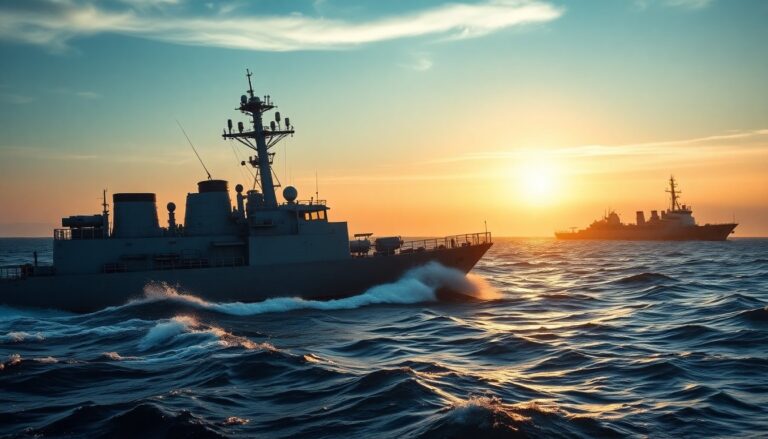
In a notable show of military preparedness, South Korean forces fired warning shots at a North Korean merchant vessel that crossed the Northern Limit Line (NLL) in the Yellow Sea. This incident occurred early on a Friday morning and highlights the delicate nature of relations between the two Koreas.
The North Korean ship crossed the NLL near the South Korean island of Baengnyeong around 5 a.m. local time, remaining on the southern side of the maritime boundary for about one hour. Reports indicate that the vessel traveled nearly 5 kilometers south of the established demarcation line.
Military actions and responses
In response to an unauthorized crossing, South Korea’s Joint Chiefs of Staff (JCS) confirmed that they issued a warning before firing warning shots. Following this, the North Korean vessel retreated from the area under South Korean maritime control.
The JCS stated, “Our military closely monitored North Korea’s movements and responded in accordance with operational procedures,” underscoring their commitment to vigilance.
Operational context
During the maritime incursion, a South Korean navy convoy was reportedly conducting operations nearby, indicating increased military activity in the region. This incident marks the first significant breach of the Northern Limit Line (NLL) by a North Korean vessel in three years, raising concerns about potential escalations in maritime tensions.
In October 2022, a North Korean ship crossed the demarcation line, triggering a prompt response from South Korean naval forces. This incident led to North Korea firing artillery shells into South Korean waters, escalating tensions in the region.
The historical context of the NLL
The Northern Limit Line (NLL) acts as the de facto maritime boundary between North and South Korea. Established after the Korean War, which lasted from 1950 to 1953, this boundary has faced continuous rejection from North Korea. The North claims that the maritime border should be drawn further south. This long-standing dispute has created a hostile environment and prompted numerous confrontations over the years.
Past conflicts and consequences
Territorial tensions in the region have led to significant confrontations, such as the 2010 artillery attack on a South Korean island and the sinking of a South Korean naval vessel, resulting in the tragic loss of 46 sailors. These incidents highlight the ongoing risk of conflict in these contested waters.
Recently, North Korean leader Kim Jong Un referred to the Northern Limit Line (NLL) as “illicit and lawless,” calling for a reassessment of maritime boundaries. This statement exacerbates the already strained relations and raises alarms regarding future maritime security in the area.
Implications for regional stability
North Korean vessel crosses border amid diplomatic tensions
The recent border crossing by a North Korean vessel coincides with Vice Foreign Minister Kim Son-gyeong’s attendance at the 80th United Nations General Assembly in New York. This combination of diplomatic efforts and military actions underscores the intricate balance between dialogue and tension in inter-Korean relations.
As the situation develops, the South Korean military has reaffirmed its commitment to protecting the Northern Limit Line (NLL). Officials stated, “We will firmly maintain our readiness posture and respond resolutely to any situation.” Such statements signal a strong defensive strategy aimed at deterring further incursions and ensuring regional stability.
The recent incident involving a North Korean vessel crossing the Northern Limit Line (NLL) highlights ongoing maritime tensions between North and South Korea. Both nations remain on high alert, and unresolved historical grievances contribute to the risk of future conflicts. This situation poses significant concerns for both regional and global security.
