

Brera Holdings' latest cryptocurrency announcement has sparked significant activity in the stock market, raising essential concerns regarding financial stability.
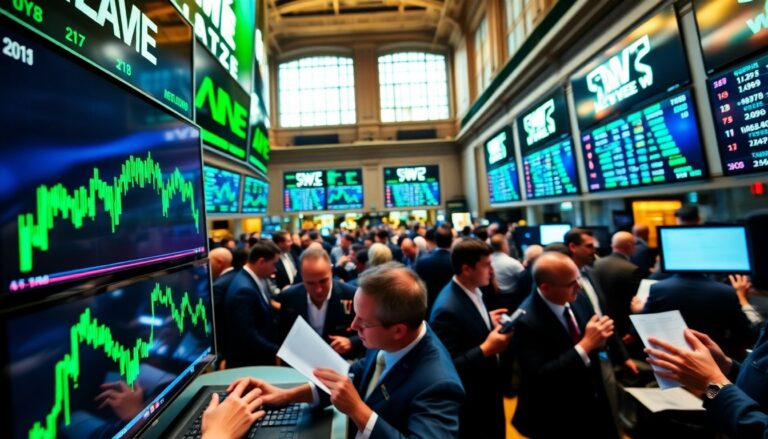
Last week, the New York Stock Exchange witnessed significant developments when Brera Holdings announced plans to invest in cryptocurrency tokens. This declaration generated considerable excitement among investors, resulting in a remarkable increase in the company’s stock price, which surged nearly 600% before stabilizing at a still noteworthy 225% rise.
Notably, the clubs affiliated with Brera Holdings do not include major teams that typically capture global attention, such as Liverpool or Real Madrid. Instead, their portfolio features Brera Ilch, a team that notably finished last in the Mongolian League, alongside other lesser-known clubs from North Macedonia and Mozambique.
This unconventional focus not only raises eyebrows but also challenges traditional investment criteria.
The speculative nature of current markets
The recent surge in stock prices, often in reaction to seemingly irrational business decisions, aligns with a concept introduced by economist J.K.
Galbraith, known as the bezzle. This term describes a scenario where market participants, including well-respected investors, become excessively optimistic, believing that growth knows no bounds. An example of this trend is Brera Holdings, which has gained momentum through backing from Emirati investors and influential personalities like Cathie Wood.
Despite a hopeful outlook for Brera, there are troubling indicators suggesting that a significant financial downturn may be imminent. Market analysts are increasingly voicing concerns that we could be on the verge of a crisis, potentially leading to widespread economic distress, job losses, and social instability.
A staggering investment in technology
The recent decision by Nvidia, a prominent manufacturer of smart chips, to invest $100 billion in OpenAI highlights the current economic climate. This investment exceeds the market value of major companies such as Unilever and BP and surpasses the total funding OpenAI has received over the past decade. Such significant financial commitments often signal markets approaching their peak, prompting concerns about long-term sustainability.
Although advancements in artificial intelligence possess the potential for transformative impact, the energy requirements of these technologies are substantial. They are comparable to the output of ten nuclear reactors, with realization of such projects potentially spanning years. This level of investment underscores the speculative nature of contemporary markets.
Indicators of economic distress
Globally, stock market indices—such as the Dow Jones, Nasdaq, S&P 500, Nikkei, and the FTSE 100—are approaching record highs. Gold has reached a new peak of $3,791 per ounce, marking a 44% increase this year. Additionally, Bitcoin, often criticized for its perceived lack of intrinsic value, is nearing its all-time high of $124,000.
Critics of Bitcoin contend that it exemplifies speculative mania. Renowned investor Warren Buffett has famously referred to it as “rat poison squared.” In a market marked by irrational exuberance, cautionary signals are frequently overlooked. Reports of escalating government debt and declining employment figures are becoming increasingly concerning.
The debt dilemma
The current state of British government debt is approaching 100% of GDP, marking a historic high in peacetime. The situation is even more alarming in France, where debt has surpassed 114% of GDP, and in the United States, where it is nearing 140%. According to a recent statement by Vitor Gaspar from the International Monetary Fund, global debt levels have now reached 235% of world output, primarily driven by government borrowing.
Compounding these issues is the rising unemployment rate, frequently seen as a precursor to recession. In the UK alone, payroll numbers have decreased by 178,000 since the government’s last budget in October. The Federal Reserve in the United States has acknowledged “downside risks to employment,” reflecting growing concerns about economic stability.
Historical precedents and future forecasts
Economic implications of tariff conflicts
Tariff conflicts have historically triggered significant economic downturns. The Great Depression of the 1930s stands as a prominent example. During that period, global GDP experienced a dramatic collapse, resulting in unprecedented unemployment and social unrest. The current financial climate, characterized by high levels of debt and market speculation, mirrors those challenging circumstances.
From a financial perspective, concerns about national and global economic stability are mounting. The absence of a genuine recession since 2008-2009 raises the possibility of an impending downturn. As the current bull market appears to be nearing its end, indicators such as gold prices can provide valuable insights into investor sentiment.
Financial crises can arise suddenly, akin to flash floods. Market panic is often intensified by automated trading algorithms. As the threat of economic turmoil looms, it is essential for policymakers and financial leaders to identify these risks before they escalate.
