

Explore the captivating evolution of football tactics and their profound influence on the game.
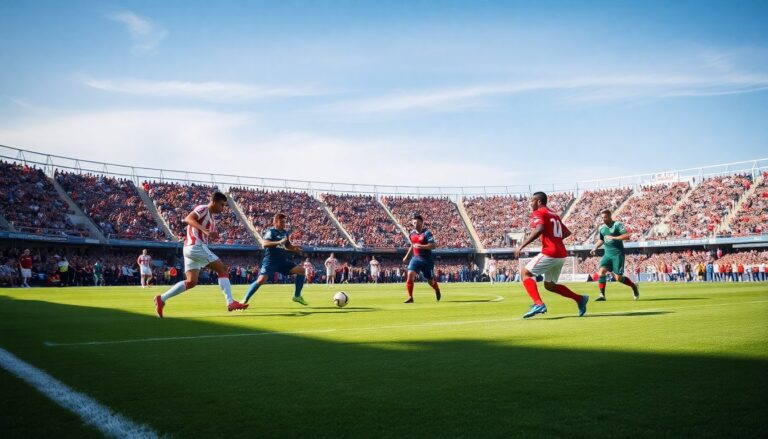
Football, often referred to as the beautiful game, has undergone significant tactical evolution since its inception. The strategies that shape how teams approach matches have transformed, influenced by factors such as culture, technology, and player physicality. This article explores the key developments in football tactics and their implications for the modern game.
The early days of football tactics
In the early 20th century, football was primarily played in a 2-3-5 formation, commonly known as the WM formation. This setup emphasized attack, with five forwards generating numerous scoring opportunities. However, as the game evolved, the need for a balance between offense and defense became apparent.
The first tactical shift occurred in the 1920s with the introduction of the 3-2-2-3 formation, which provided teams with a stronger defensive structure.
The impact of the offside rule
The implementation of the offside rule in the late 19th century significantly altered the dynamics of football.
Teams began to adopt tactical systems that leveraged the rule to their advantage, leading to the establishment of the defensive line. This strategy not only enabled teams to surprise opponents but also created a dynamic interplay between attackers and defenders.
Mid-20th century: The rise of tactical systems
As football progressed into the mid-20th century, teams explored various tactical systems that emphasized structured formations. The emergence of the 4-4-2 formation in the 1960s marked a pivotal moment, providing a balanced approach that prioritized teamwork. This formation became a standard for many teams, allowing for both defensive stability and attacking versatility.
The influence of iconic managers
Managers such as Rinus Michels and Arrigo Sacchi revolutionized football tactics with their innovative methodologies. Michels introduced the concept of total football, wherein players were interchangeable and capable of playing multiple positions, enhancing team fluidity and adaptability. Sacchi’s AC Milan further refined tactical sophistication by employing high defensive lines and pressing, laying the groundwork for contemporary defensive strategies.
Modern football tactics: A new era
Today, football tactics are more intricate than ever, with a variety of formations and strategies utilized by teams globally. The rise of the 4-3-3 formation has gained traction, focusing on ball possession and high pressing. This formation enables teams to dominate midfield play and create numerous attacking opportunities.
The role of technology in tactical development
Technology has played a crucial role in the evolution of football tactics. The use of video analysis and data analytics has transformed match preparation. Coaches can now analyze opponents’ patterns and adapt their strategies accordingly, making tactical decisions more informed and precise.
Additionally, the introduction of VAR (Video Assistant Referee) has influenced tactical approaches, as teams now factor in the potential for video review in their game plans.
The evolution of football tactics reflects the changing dynamics of the game. From early formations prioritizing attack to the sophisticated strategies dominating modern football, tactics have become integral to the sport. Understanding these developments enhances appreciation for football, as tactics continue to evolve with each match played.
