

**Emergency Landing of Tui Flight at Birmingham Airport Due to Bird Strike** On [insert date], a Tui flight was forced to make an emergency landing at Birmingham Airport following a bird strike incident. The aircraft encountered a collision with a bird shortly after takeoff, prompting the pilot to prioritize passenger safety by returning to the airport. No injuries were reported, and the flight landed safely, highlighting the importance of swift decision-making in aviation safety protocols.
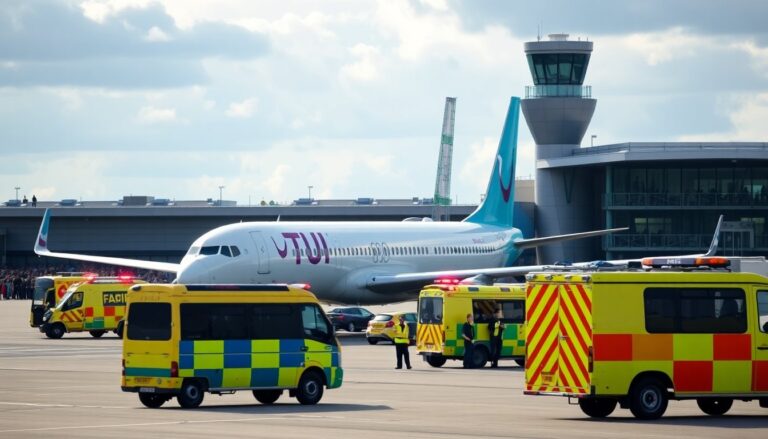
On a routine flight, a Tui Airlines aircraft encountered an unexpected challenge shortly after departing from Birmingham Airport. The incident involved a bird strike, prompting immediate action from the flight crew. While not uncommon, such occurrences can pose serious risks to aviation safety, necessitating a rapid response.
The aircraft was forced to return to Birmingham Airport, where operations were temporarily halted to facilitate a safe landing. This incident underscores the importance of safety protocols and the quick thinking of airline professionals in ensuring passenger safety.
Understanding bird strikes and their implications
A bird strike occurs when an aircraft collides with a bird during flight. According to aviation safety experts, these incidents can vary from minor occurrences to serious hazards that jeopardize aircraft integrity. Birds can cause significant damage to engines, windshields, or other critical components of an airplane.
During takeoff and landing, aircraft are particularly vulnerable to these strikes due to their lower altitude. The risk increases in areas near airports where wildlife is prevalent. Consequently, airports implement various safety measures, such as habitat management and wildlife monitoring, to mitigate this risk.
Emergency procedures in aviation
When an aircraft experiences a bird strike, the flight crew follows established emergency procedures to assess the situation. Pilots are trained to handle such scenarios effectively, with their primary focus being the safety of passengers and crew onboard.
In the case of the Tui flight, the crew quickly evaluated the aircraft’s condition and opted to return to Birmingham Airport. The decision to land was made to minimize risk, demonstrating the crew’s adherence to safety protocols. This level of preparedness is essential in aviation, where split-second decisions can make all the difference.
Impact on airport operations
Following the incident, Birmingham Airport took immediate action by temporarily suspending operations. This measure was crucial to ensure that the aircraft could land without complications. Such pauses in airport operations may inconvenience travelers, but they are vital for maintaining safety standards.
The swift response of airport authorities reflects a commitment to passenger safety and operational integrity. Once the aircraft landed safely, operations resumed, showcasing the resilience of airport management in handling unforeseen circumstances.
Lessons learned and future implications
Every incident, including the recent bird strike on the Tui flight, serves as a learning opportunity for the aviation industry. Continuous training for flight crews, rigorous safety protocols, and effective communication systems are vital components that enhance overall safety.
Moreover, advancements in technology and wildlife management strategies are being developed to reduce the likelihood of bird strikes. For instance, airports are increasingly using radar systems and other monitoring tools to detect and manage wildlife near flight paths.
The aircraft was forced to return to Birmingham Airport, where operations were temporarily halted to facilitate a safe landing. This incident underscores the importance of safety protocols and the quick thinking of airline professionals in ensuring passenger safety.0
