

Explore the captivating cultural landscape of the United Kingdom, where history, art, and traditions seamlessly intertwine.
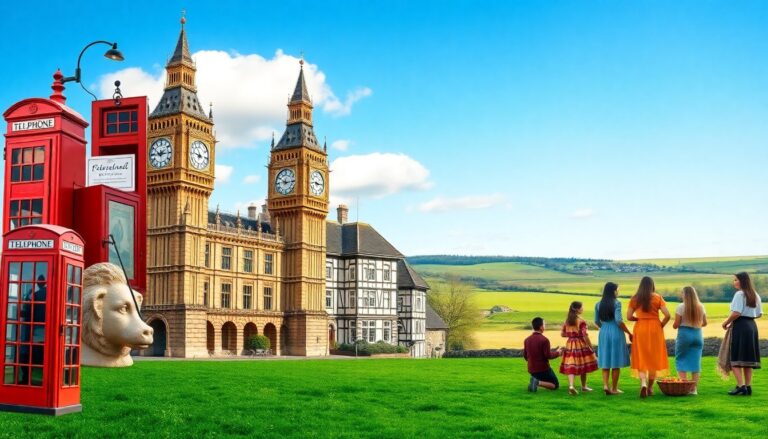
The United Kingdom (UK) represents more than just geographical boundaries; it is a vibrant tapestry woven from a rich history, diverse cultures, and profound traditions. Comprising England, Scotland, Wales, and Northern Ireland, the UK possesses a distinctive cultural identity shaped by centuries of historical events, artistic movements, and social transformations.
This article explores various facets of UK culture, focusing on its historical roots and contemporary expressions.
The historical backdrop of UK culture
The history of the United Kingdom is marked by significant events that have left a lasting impact on its culture.
From the Roman invasion in 43 AD to the Industrial Revolution in the 18th century, each era has contributed uniquely to the cultural landscape. The blending of various cultures through invasions, trade, and migration has resulted in a unique tapestry that reflects the UK’s past.
Influences of the Romans and Normans
The Roman presence in Britain introduced new architectural styles, engineering techniques, and even the Latin language. Following the Roman withdrawal, the Normans invaded in 1066, bringing feudalism and a new cultural hierarchy. This period witnessed the construction of iconic structures such as the Tower of London and Windsor Castle, which remain symbols of the nation’s heritage.
As the UK evolved, the Renaissance and Enlightenment periods heralded a wave of intellectual and artistic advancement. Notable figures like William Shakespeare and Isaac Newton emerged, solidifying the UK’s position as a cultural and intellectual hub.
Modern cultural expressions
Today, UK culture is an amalgamation of traditional and modern influences, continuously evolving while maintaining its historical roots. The rise of the Internet and globalization has further diversified the cultural scene, leading to new forms of art, music, and literature.
Music and arts
The UK has significantly influenced the global music landscape. From The Beatles to Adele, British artists have shaped various genres, including rock, pop, and electronic music. The Britpop movement of the 1990s, led by bands like Oasis and Blur, exemplifies the UK’s vibrant music culture.
In the realm of the arts, the UK boasts a rich theatrical tradition, featuring iconic venues such as the Globe Theatre and the National Theatre. Contemporary playwrights like David Mamet and Harold Pinter continue to engage audiences, reflecting societal issues through their works.
The role of traditions and festivals
Traditions play an essential role in the cultural identity of the UK. Events such as Guy Fawkes Night, the Notting Hill Carnival, and Hogmanay in Scotland celebrate the UK’s rich heritage. These festivities not only commemorate historical events but also foster a sense of community and belonging.
The influence of religious traditions is also evident, with festivals like Christmas and Easter celebrated nationwide. These occasions often feature unique customs, such as singing carols or decorating Easter eggs, which further enrich the cultural landscape.
A cultural mosaic
The culture of the United Kingdom is a dynamic blend of historical influences, modern expressions, and vibrant traditions. The interplay between the past and present creates a cultural mosaic that is both fascinating and complex. As the UK continues to evolve, its culture remains a vital part of its identity, offering a unique perspective on the human experience.
