

Trump's Remarks on Ukraine Indicate a Possible Shift in U.S. Policy Amidst Escalating Conflicts Former President Trump's recent comments regarding Ukraine suggest a significant potential shift in U.S. foreign policy as tensions continue to rise in the region. His statements could impact diplomatic relations and strategic decisions moving forward, reflecting a changing landscape in international affairs.
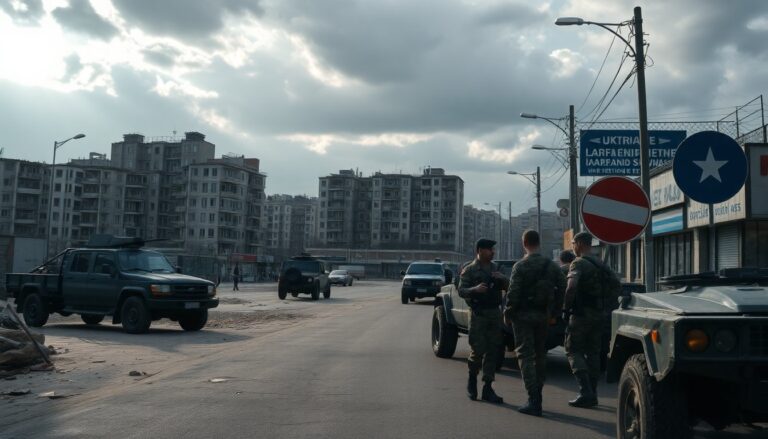
As the geopolitical landscape shifts dramatically, tensions between Russia and Europe are escalating. The Kremlin’s ongoing military operations in Ukraine have led to assertive claims of territorial control, particularly in key cities like Kupiansk. Recent statements from Russian officials indicate that their forces are nearing a significant victory in this strategically vital area, which could enable further advances into the eastern region of Donetsk.
Reports from the Russian Ministry of Defence suggest that they currently dominate two-thirds of Kupiansk’s urban infrastructure, raising alarms among Ukrainian officials. The potential capture of this city is perceived as pivotal for Russia, as it may provide a crucial pathway into the heart of Ukraine’s fortified defenses.
Russia’s military ambitions and territorial claims
The Russian military’s focus on Kupiansk has been evident throughout the year, with officials asserting that seizing this city will facilitate movements towards the Sloviansk-Kramatorsk area, regarded as one of Ukraine’s most fortified regions.
The Ministry of Defence in Moscow has expressed confidence that their troops have effectively encircled Ukrainian forces, enhancing their grip on the battlefield.
Despite these claims, independent assessments from institutions like the Institute for the Study of War (ISW) challenge the narrative of Russian success, estimating that the actual territory gained is less than what Moscow proclaims. As of late September, Russia boasted of acquiring over 4,700 square kilometers of land, yet ISW’s evaluations placed this figure significantly lower, highlighting a tendency for the Kremlin to exaggerate its military progress.
U.S. and European responses
The diplomatic front has seen notable developments, particularly with U.S. President Donald Trump’s recent comments during the United Nations General Assembly (UNGA). After months of maintaining a rigid stance on the conflict, Trump has begun to exhibit a more supportive attitude towards Ukraine, praising its military resilience and hinting at the possibility of a Ukrainian victory.
In a surprising twist, Trump suggested that with the right support from NATO and European allies, the restoration of Ukraine’s pre-2014 borders could become a tangible objective. This marks a significant departure from earlier statements where he deemed such aspirations unrealistic. His evolving stance seems to be influenced by recent Ukrainian successes in striking Russian oil facilities, which have had a noticeable impact on Russia’s economic stability.
Ukrainian military strategies and advancements
Ukrainian forces have recently launched drone strikes on critical Russian infrastructure, targeting refineries that are vital for fuel production. Incidents reported in late September showcased the effectiveness of Ukrainian military operations, including a series of attacks on refineries such as the Salavat and the Afipsky, which reportedly disrupted significant portions of Russian fuel processing capabilities.
In light of these military developments, Ukraine is also exploring new defense partnerships, with President Zelenskyy pushing for a comprehensive deal involving advanced weaponry from the United States. Discussions have surfaced regarding the procurement of Tomahawk missiles, which could significantly enhance Ukraine’s military capabilities given their extended range. This initiative reflects Ukraine’s proactive approach in securing necessary resources to bolster its defense against ongoing Russian aggression.
Potential shifts in U.S. military support
Trump’s recent remarks have led to speculation about a possible military aid package, estimated to be worth approximately $90 billion. This would represent a notable shift from his previous reluctance to provide extensive support to Ukraine. As discussions unfold, the prospect of the U.S. lifting restrictions on long-range strike capabilities is also gaining traction, potentially allowing Ukraine to target deeper into Russian territory.
While Trump maintains a focus on minimizing financial contributions to Ukraine’s defense, his administration’s potential arms deal signals a strategic pivot that could reshape the conflict’s dynamics. The complexities of NATO’s role in the region are further underscored by recent incidents involving Russian aircraft intruding into airspace near NATO nations, raising questions about collective defense protocols.
The broader implications for European security
Reports from the Russian Ministry of Defence suggest that they currently dominate two-thirds of Kupiansk’s urban infrastructure, raising alarms among Ukrainian officials. The potential capture of this city is perceived as pivotal for Russia, as it may provide a crucial pathway into the heart of Ukraine’s fortified defenses.0
Reports from the Russian Ministry of Defence suggest that they currently dominate two-thirds of Kupiansk’s urban infrastructure, raising alarms among Ukrainian officials. The potential capture of this city is perceived as pivotal for Russia, as it may provide a crucial pathway into the heart of Ukraine’s fortified defenses.1
Reports from the Russian Ministry of Defence suggest that they currently dominate two-thirds of Kupiansk’s urban infrastructure, raising alarms among Ukrainian officials. The potential capture of this city is perceived as pivotal for Russia, as it may provide a crucial pathway into the heart of Ukraine’s fortified defenses.2
