

Explore the captivating layers of England's rich history and vibrant culture.
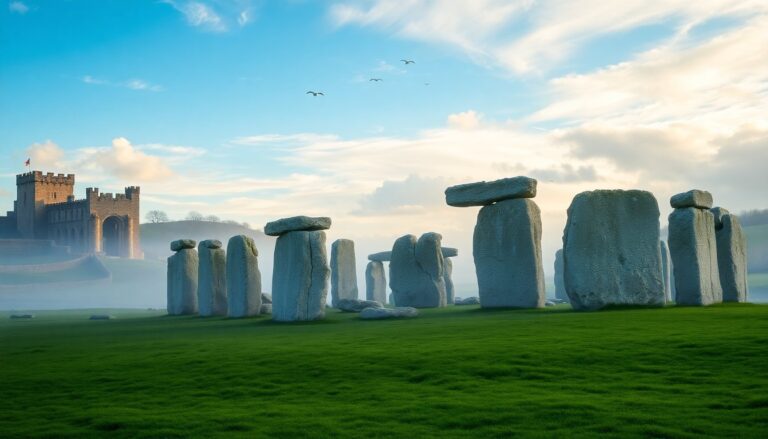
England, a country rich in history and culture, presents a narrative that spans thousands of years. From the ancient ruins of Stonehenge to the iconic Tower of London, every corner reveals a story. England is not merely a geographical location; it is a complex blend of influences, traditions, and innovations that define its identity.
As one of the four constituent countries of the United Kingdom, England occupies a distinctive position in global context. Its history includes significant events, such as the Roman invasion and the Norman Conquest, shaping a culture that is both fascinating and diverse.
The historical evolution of England
The timeline of England’s history can be segmented into key periods, each contributing to the nation’s contemporary identity. The arrival of the Romans in 43 AD marked a transformative era, characterized by the construction of roads, towns, and Hadrian’s Wall, establishing a foundation for future growth.
This period introduced Roman culture, significantly influencing local customs and practices.
The Middle Ages: A turning point
After the Roman withdrawal in the 5th century, England entered a tumultuous phase known as the Middle Ages. The Anglo-Saxon period saw the formation of various kingdoms, while Viking invasions brought Norse culture and settlement. The crowning of William the Conqueror in 1066, following the Battle of Hastings, was a pivotal moment, initiating Norman governance. This era resulted in substantial changes in administration, architecture, and language, with Old French merging with Old English.
Cultural landmarks and contributions
England is home to numerous cultural landmarks that reflect its extensive past. The British Museum, established in 1753, houses millions of artifacts dedicated to human history and culture, showcasing items from diverse eras and regions. Another vital institution is the National Gallery, which features an impressive collection of European paintings, reinforcing England’s cultural heritage.
Literature and the arts
One of England’s most significant contributions to the world is its literary heritage. The works of William Shakespeare, Jane Austen, and Charles Dickens have transcended time, continuing to influence writers and readers globally. The English language has evolved significantly, absorbing vocabulary from various languages and enriching its lexicon.
The arts have also thrived in England, with movements such as Romanticism and the Victorian era challenging conventions and exploring new themes. The emergence of the British Invasion in the 1960s, particularly in music with bands like The Beatles and The Rolling Stones, revolutionized not only English music but also global pop culture.
Modern England: A diverse society
Today, England is a melting pot of cultures, shaped by historical migrations and its colonial past. London, as a major global city, exemplifies this diversity, with communities from around the world enriching its vibrant atmosphere. Festivals such as the Notting Hill Carnival celebrate this harmonious blend of traditions and practices.
Contemporary issues, such as Brexit, have provoked discourse regarding national identity and England’s future within the European context. This ongoing dialogue concerning belonging and cultural integration is essential for understanding modern English society.
Exploring England’s history and culture unveils a complex narrative characterized by resilience, innovation, and diversity. From its ancient origins to current challenges, England continues to evolve, reflecting the myriad influences shaping it throughout the centuries. Engaging with its past and celebrating the contributions of its people enhances the appreciation of this remarkable nation.
