

Trump's Insights on the Recent Hamas Peace Plan Agreement Explore the key perspectives shared by Donald Trump regarding the recent Hamas peace plan agreement. Gain an understanding of his analysis on the implications for Middle Eastern diplomacy, security, and international relations. Stay informed on his views about the potential impact of the agreement on regional stability and U.S. foreign policy. Learn how Trump's approach to this complex issue shapes the broader conversation around...
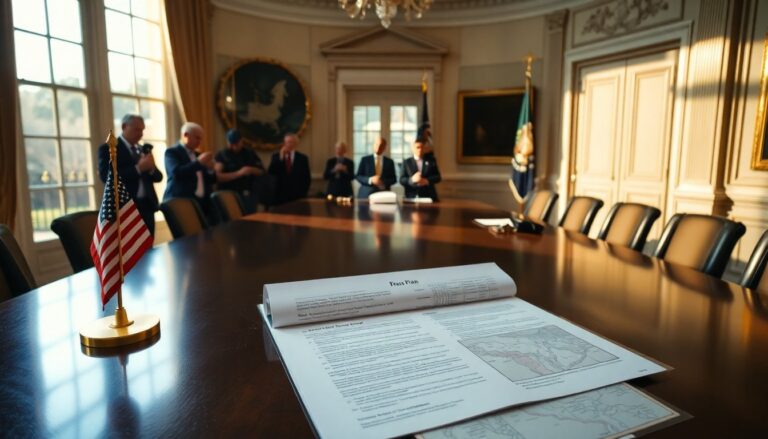
In a significant development, President Trump delivered a statement from the White House regarding a pivotal moment in the ongoing Middle Eastern conflict. This announcement followed Hamas, the Palestinian militant organization, indicating its willingness to accept a newly proposed peace plan.
The implications of this agreement could reshape the dynamics of peace negotiations in the region.
Context of the peace plan
The peace initiative, aimed at fostering dialogue and reconciliation, has faced considerable scrutiny and debate since its inception. Many observers view this as an opportunity to address long-standing tensions between Israel and Palestine.
Trump’s administration has advocated for direct negotiations, emphasizing that both parties must engage constructively for a sustainable resolution.
Hamas’s acceptance
Hamas’s acceptance of the peace plan is particularly noteworthy given the group’s historical stance against previous initiatives.
The organization, which governs the Gaza Strip, has often resisted proposals perceived as unfavorable to Palestinian interests. This pivot suggests a potential shift in strategy, indicating readiness to explore diplomatic avenues that may lead to greater autonomy and recognition for Palestinians.
In his statement, Trump expressed optimism regarding this new development and underscored the importance of a collaborative approach. He highlighted that peace cannot be achieved through unilateral actions but requires mutual respect and understanding. Trump’s remarks suggested that this is a crucial moment in the peace process, one that could pave the way for future negotiations.
International reactions
The international community has reacted with a mix of skepticism and hope following Hamas’s announcement. Many foreign leaders have welcomed the prospect of renewed discussions but remain cautious about the complexities involved. The history of broken agreements and ongoing violence raises questions about the sincerity of Hamas’s commitment to peace.
Potential challenges ahead
Despite the optimistic tone from the White House, several challenges loom on the horizon. One significant concern is the internal division among Palestinian factions. While Hamas appears to be open to negotiations, other groups may not share the same enthusiasm. The Palestinian Authority, led by President Mahmoud Abbas, has historically been at odds with Hamas, complicating the prospects for unified representation in talks.
Furthermore, the reaction from Israel will be a critical factor. The Israeli government has expressed reservations about Hamas’s intentions, fearing that any agreement could lead to further escalation rather than a peaceful resolution. Trump’s administration has urged Israel to respond favorably, suggesting that the peace plan offers a balanced approach that takes into account the security needs of both Israelis and Palestinians.
Looking ahead
As the situation evolves, the world watches closely to see how both sides will navigate this delicate moment. Trump’s statement serves as a reminder that while progress is possible, it requires persistent effort and commitment from all parties involved. The hope is that this acceptance by Hamas can lead to meaningful dialogue that addresses the core issues affecting the region.
Trump’s announcement highlights a potential turning point in the Israel-Palestine conflict. The acceptance of the peace plan by Hamas could signal a readiness for dialogue that has been absent for years. However, the path to lasting peace is fraught with obstacles, and it remains to be seen whether this moment can be transformed into a sustainable agreement. The international community’s role, alongside the actions of both Israeli and Palestinian leaders, will be crucial in shaping the future of this tumultuous region.
