

Legislative Update: Enhancing Police Management of Protests and Addressing Community Concerns Recent legislation has been enacted to empower law enforcement agencies in effectively managing frequent protests, while simultaneously addressing the concerns and fears of the community. This new framework aims to balance the right to peaceful assembly with the necessity of public safety, fostering a collaborative environment between law enforcement and community members. Key features of the...
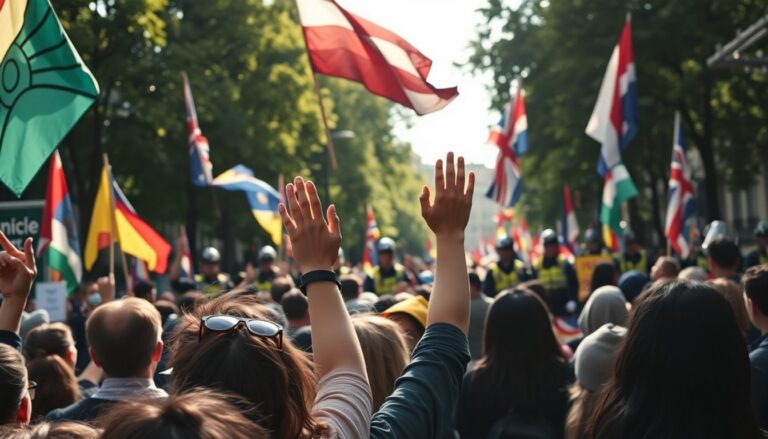
In response to escalating public demonstrations advocating for Palestine, the UK government plans to enhance police powers to regulate protests. Updates to the Public Order Act 1986 will allow law enforcement to assess the cumulative impact of ongoing protests, particularly in areas experiencing repeated disturbances.
These changes follow significant unrest during a recent protest in London, resulting in the detention of nearly 500 individuals. Home Secretary Shabana Mahmood expressed concerns about the distress faced by local communities, especially the Jewish population, amid the ongoing protests.
New legislative changes and their implications
The government intends to revise Sections 12 and 14 of the Public Order Act, empowering police to evaluate how successive demonstrations affect local neighborhoods. This update aims to equip law enforcement with the authority to impose conditions on public gatherings, thereby ensuring the rights of residents to feel secure.
Addressing community safety
Mahmood underscored the importance of balancing the right to protest with community safety. She stated, “The right to protest is a fundamental freedom in our country. However, this freedom must be balanced with the freedom of their neighbors to live their lives without fear.”
The Home Secretary acknowledged the increasing apprehension among various communities, particularly following recent events that have left many feeling unsafe. The proposed changes aim to protect the right to protest while ensuring that the general population can conduct their daily lives without intimidation.
Response to recent protests and community concerns
In light of protests that have heightened tensions, including a notable demonstration in London after an attack on a synagogue in Manchester, police reported a total of 492 arrests. Most of these detentions were connected to support for a prohibited organization, illustrating the serious implications of these protests.
Empowering police to take action
Currently, the threshold for police to prohibit a march is quite high, requiring evidence of potential serious public disorder. However, the forthcoming legislative changes will enable police to impose restrictions on protests that have repeatedly occurred at the same location. If an event is determined to have caused ongoing disruption, law enforcement can set conditions such as relocating the event to a different site.
Non-compliance with these conditions could lead to arrests and legal action against organizers and participants. These measures aim to prioritize public safety, particularly for vulnerable communities.
Collaboration with community organizations
Alongside these legislative changes, the government is working with the Community Security Trust, which supports Jewish communities across the UK. Local Government Secretary Steve Reed has urged councils to effectively utilize their existing resources to protect these communities during protest activities.
Mahmood recently expressed appreciation to chief constables for their swift and professional management of public order issues, particularly following the Manchester synagogue incident. She emphasized the necessity of employing the full range of available powers to effectively manage public disorder.
These changes follow significant unrest during a recent protest in London, resulting in the detention of nearly 500 individuals. Home Secretary Shabana Mahmood expressed concerns about the distress faced by local communities, especially the Jewish population, amid the ongoing protests.0
