

Explore the Rich Cultural Heritage of the United Kingdom.
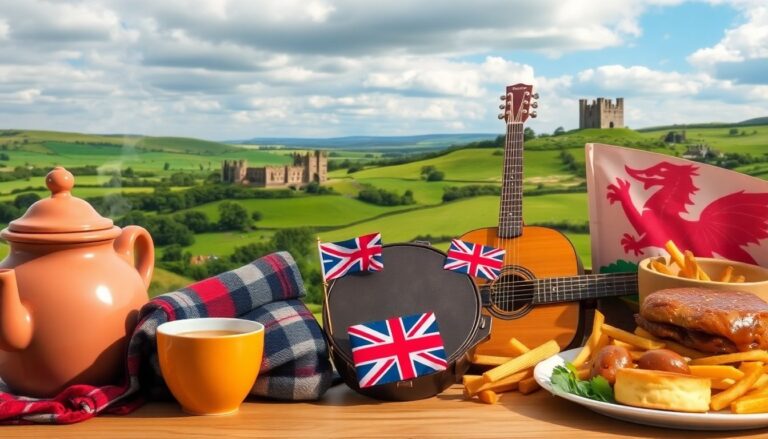
The United Kingdom, commonly known as the UK, is a nation rich in history and cultural diversity. Comprising four distinct countries—England, Scotland, Wales, and Northern Ireland—the UK offers a unique blend of traditions, languages, and customs. This article delves into the compelling cultural landscape of the UK, examining the historical influences that have shaped its society and continue to define its identity.
A brief overview of the UK’s cultural heritage
The cultural heritage of the UK reflects its complex history, marked by invasions, colonization, and trade. From the ancient Celtic traditions of the British Isles to the Roman occupation and subsequent Anglo-Saxon settlements, each era has left a lasting impact on the cultural fabric of the nation.
The Industrial Revolution transformed the UK into a global powerhouse, attracting waves of immigrants who enriched its cultural landscape.
Influence of major historical events
Significant historical events have played a crucial role in shaping the UK’s cultural identity. The Norman Conquest of 1066 not only changed the political landscape but also introduced a new language—Norman French—which greatly influenced the development of English.
Likewise, the expansion of the British Empire broadened the UK’s cultural horizons, introducing a variety of customs, languages, and culinary traditions from around the globe.
Language and dialects: A reflection of diversity
Language is a fundamental aspect of culture in the UK. While English is the predominant language, the UK is home to several regional dialects and minority languages, including Welsh, Scottish Gaelic, and Irish. The preservation of these languages is essential for maintaining cultural identity. For example, the Welsh Language Act 1993 acknowledged the importance of Welsh and facilitated its use in public life, thus promoting its vitality.
The arts: A cultural cornerstone
The UK boasts a rich tradition in the arts, encompassing literature, music, theater, and visual arts. Esteemed writers such as William Shakespeare and Jane Austen have left an enduring legacy, influencing countless authors globally. In music, the UK has produced legendary bands like The Beatles and The Rolling Stones, whose influence on global music culture is immeasurable.
The West End in London is synonymous with world-class theater, showcasing both classic plays and contemporary productions. The cultural scene extends beyond London, with vibrant arts festivals held in cities across the UK, celebrating local talent and creativity.
Social customs and traditions
Social customs in the UK are diverse and often reflect the historical influences of various cultures that have settled there. Traditional events such as Guy Fawkes Night and Christmas celebrations showcase a blend of ancient and modern practices. The afternoon tea ritual is another quintessentially British custom, embodying the country’s love for social gatherings centered around food.
Modern challenges and cultural evolution
As the UK navigates the complexities of the 21st century, it faces challenges related to cultural integration and identity. The effects of globalization have led to a dynamic cultural exchange, where traditional practices coexist with modern influences. The debate surrounding Brexit has also raised questions about the future of cultural ties both within and outside the UK.
Despite these challenges, the UK’s cultural landscape remains vibrant and resilient. The ongoing dialogue surrounding identity, inclusion, and representation continues to shape the evolution of culture in the UK, ensuring that it remains a dynamic and ever-changing tapestry.
